

Also called blue tea or butterfly pea flower tea, this caffeine-free herbal drink is loved for its bright blue colour and its long list of health benefits.
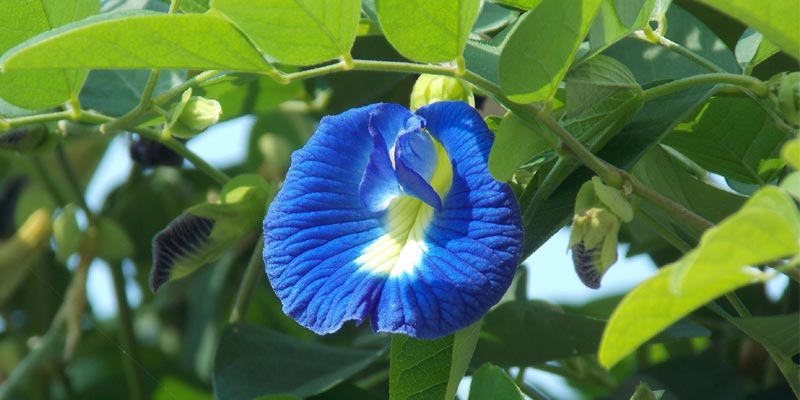
Vividly deep blue, with a solitary hint and marked with a light yellow color, the blue butterfly flower is a treat to the eyes. It is also known as Asian pigeonwings, butterfly pea, Kordofan pea, Darwin pea, and botanically named Clitoriaternatea. It is native to equatorial Asia. Often grown as an ornamental plant, the blue butterfly plant requires little care when cultivated. The bright blue color of the butterfly pea has been used as a coloring agent in food. It comes with a host of health benefits. It has also been used in traditional Ayurvedic medicine to treat various ailments. Conventional Chinese medicine ascribes different healing qualities to blue butterfly pea. The most common form of blue butterfly pea consumption is tea from ternatea flowers.
Key chemical components in Blue Butterfly Pea contain anthocyanins, which give the flowers their blue hue, and cyclotides, which act as potent insecticides. These cyclotides derive from a modified albumin gene and are formed through an enzyme known as butelase-1, a topic of recent biotechnological research. (Source)
Blue Butterfly Pea Benefits at a Glance
| Benefit area | How blue butterfly pea may help |
|---|---|
| Brain & memory | Traditionally used as a brain tonic and memory enhancer |
| Skin | Antioxidants support hydration and fight glycation |
| Hair | Used in shampoos to enhance hair growth and reduce hair fall |
| Blood sugar | Helps control sugar absorption after meals |
| Blood pressure | Bioactive compounds with vasorelaxant |
| Weight | Antioxidant and anti-obesity activity |
| Mood | Traditionally used as an antistress, antidepressant aid |
Key Compounds in Blue Butterfly Pea
| Compound | Type | Role |
|---|---|---|
| Anthocyanins (ternatins) | Antioxidant pigment | Give the blue colour; fight free radicals |
| Delphinidin-3,5-glucoside | Anthocyanin | Antioxidant, anti-inflammatory properties |
| Kaempferol | Flavonol | Antioxidant properties |
| p-Coumaric acid | Phenolic acid | Antioxidant, antimicrobial |
| Cyclotides | Peptides | Insecticidal – Studies pointing to anti-tumor action |
Source: Clitoria ternatea review, Plants (2025).
Top Amazing Health Benefits of Blue Butterfly Pea
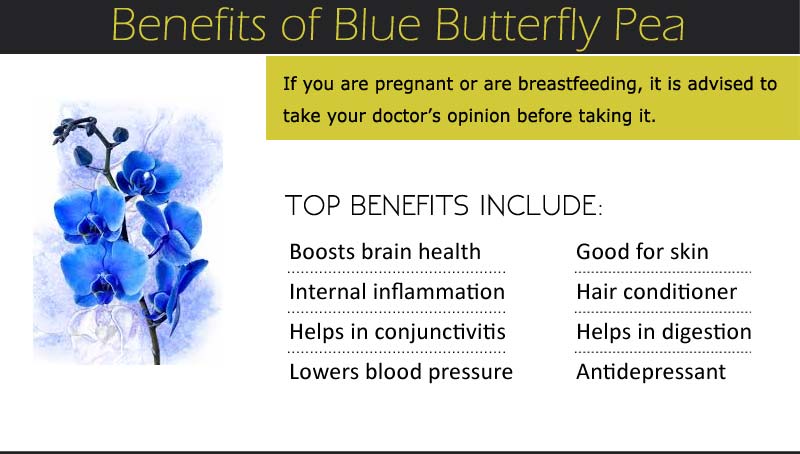
1. Boosts brain health
Good brain health is dependent on the communication levels of the brain. Blue butterfly pea contains Acetylcholine, and its consumption can increase the levels of Acetylcholine in the brain. Acetylcholine decreases with age progress, causing memory loss and other problems. Consumption of blue butterfly peas can reverse this process and improve thinking abilities. [1]
2. Fights against cancers
The blue butterfly pea can fight against cancers by penetrating the cancer cell membranes and inhibiting their growth. The blue butterfly pea plant is one of those few plants with cyclotides, which have peptides with anti-tumor benefits. Because of these unique properties, the plant is gaining attention in traditional and scientific medical communities. [2]
3. Treats Internal Inflammation
Consuming blue butterfly pea tea is beneficial for addressing internal inflammation and bodily swelling. This herbal remedy has natural anti-inflammatory properties that not only alleviate general discomfort but are also helpful in treating headaches. Its therapeutic effects extend to reducing redness, heat, and pain associated with inflammation. Blue butterfly pea tea is increasingly recognized as a holistic approach to managing internal inflammation and associated aches. [1]
4. Helps in conjunctivitis
The blue butterfly pea plant roots cure many eye ailments, especially in Southeast Asia. The beautiful flowers of the blue butterfly pea are used to treat eye infections like ‘pink eye’ or conjunctivitis. The roots of the blue butterfly pea plant are used for many eye ailments in Southeast Asian countries. Given the multiple uses of different plant parts for eye care, it is a holistic solution for eye health.
5. Lowers blood pressure
Patients with high blood pressure or hypertension can take the blue butterfly pea tea to control the same. Blue butterfly pea (Clitoria ternatea) has antioxidants and other bioactive compounds in the plant. The presence of these contribute to its potential anti-hypertensive properties. [1]
6. Good for skin
Blue butterfly pea is full of antioxidants and has properties that reverse the damage caused to the skin by sugar molecules. Sugar molecules cause skin aging due to the process of Glycation, which causes damage to skin proteins. Blue butterfly pea tea has anti-glycation and can prevent premature aging. [3]
7. Used for hair
The blue butterfly pea plant is an ingredient in many shampoos and conditioners. It has properties that nourish hair follicles, promote hair growth, prevent greying of hair, and reduce hair fall. [3]
8. Helps in digestion
The antioxidants in blue butterfly pea tea can relax the stomach muscles and make the digestive process easier and faster.
9. Acts as an antidepressant
The blue butterfly pea tea’s vivid, bright blue color can help people suffering from depression. [4]
10. Helps in pregnancy
The blue butterfly pea plant derives its botanical name from its resemblance to the female genitals, the clitoris. It is believed to help in conception, and much like chamomile and green teas, it provides a healthy alternative to caffeine during pregnancy.
11. Helps in diabetes
Blue butterfly pea has the fantastic property of controlling the absorption of sugar into the bloodstream. Hence, the plant is often used to treat diabetic patients. [2]
12. For general pains and aches
The extract of the butterfly pea juice with a bit of salt can steam the site of ear infection. Chew two dried leaves of blue butterfly pea if you suffer from migraines. It also helps with headaches. [1]
Blue Butterfly Pea Tea Side Effects and Precautions
Blue butterfly pea tea is generally considered safe when taken in normal amounts, and in 2021 the U.S. FDA approved butterfly pea flower extract as a natural food colorant. [5] Still, a few points are worth keeping in mind:
| Concern | What to know |
|---|---|
| Headache | Few people report headaches when the tea is taken very strong or too often. Keep it light. |
| Pregnancy and breastfeeding | Safety is not fully proven for pregnant women. Better to ask your doctor before regular use. |
| High doses | Very high amounts of root extract may stress the liver or kidneys. Stick to normal tea amounts. |
| Strength of evidence | Many benefits are shown in lab or animal studies. Human proof is limited. |
Comparison of Blue Butterfly Pea with Other Herbal Teas
| Herbal Tea | Primary Benefit | Taste Profile | Caffeine | Colour |
|---|---|---|---|---|
| Blue Butterfly Pea | Antioxidant-rich | Earthy, floral | Caffeine-free | Blue (turns purple with lemon) |
| Green Tea | Boosts metabolism | Slightly bitter | Has caffeine | Pale green |
| Chamomile Tea | Promotes relaxation | Mild, sweet | Caffeine-free | Pale gold |
| Peppermint Tea | Aids digestion | Refreshing, minty | Caffeine-free | Light yellow-green |
| Hibiscus Tea | Supports blood pressure | Tart, tangy | Caffeine-free | Deep red |
How to Use Blue Butterfly Pea (Quick Guide)
| Form | Amount per cup | Notes |
|---|---|---|
| Fresh flowers | About 10-12 | Steep in hot water till deep blue |
| Dried flowers | 4-5 | More potent than fresh; use less |
| Add lemon / lime | A few drops | Turns the tea purple |
| Add honey, ginger or mint | To taste | Improves flavour and benefits |
FAQ on Blue Butterfly Pea
How to make blue butterfly pea tea?
Making the blue butterfly pea tea is quite simple and easy. And because it comes loaded with immense health benefits, it is often substituted for cups of caffeine. It is often served warm, though some people may like it cold. You can add honey, ginger, or mint to enhance the taste and benefits. The changing color is based on the agent added to the tea. Here is how to make blue butterfly pea tea – your healthy cup of caffeine-free beverage –
- Take about a dozen butterfly pea flowers and steep them in hot water until the color of the water changes to a vivid blue and the flowers turn pink. If you do not have fresh flowers, use dry flowers instead.
- Let the tea brew for about 10 minutes.
- Strain the liquid in a cup.
- Add a dash of lemongrass, lemon drops, honey, or ginger to enhance the taste. The color of the tea will change accordingly, like lemon may make it purplish.
- Serve it warm or cold.
Are blue butterfly pea flowers edible?
The blue butterfly pea’s bright, beautiful blue flowers are often used in salads for their color, taste, and health benefits. It is often used as a food coloring in sweet and savory dishes. Dried flowers and seeds are also used for their culinary properties across Asian countries.
What are the side effects of blue butterfly pea tea?
Though no side effects have come to the fore, it is recommended not to prolong the consumption of blue butterfly peas. If you are pregnant or are breastfeeding, it is advised to take your doctor’s opinion before you include blue butterfly pea tea in your diet.
Does blue butterfly pea tea have caffeine?
No. Blue butterfly pea tea is naturally caffeine-free, which makes it a good drink for the evening or as a swap for coffee.
What does butterfly pea flower tea taste like?
On its own the tea has a mild, earthy and slightly woody or floral taste. Many people add honey, lemon, ginger or mint to make it tastier.
Why does butterfly pea tea change colour?
The blue colour comes from anthocyanins. When you add something acidic like lemon, the tea turns purple or pink. This colour change is due to the change in the drink’s pH level.
Is blue butterfly pea good for weight loss?
Butterfly pea flower is rich in antioxidants and has been studied for anti-obesity activity in early research. It is caffeine-free and low in calories, so it can fit into a weight-management diet, but it is not a magic fix.
References
- Mukherjee et al. The Ayurvedic medicine Clitoria ternatea – from traditional use to scientific assessment. J Ethnopharmacol (2008).
- Clitoria ternatea: Perspectives on Its Application in Foods and Potential Health Benefits
- Healthline: Butterfly Pea Flower Benefits.
- Neuroprotective and anti-neuroinflammatory activity of Clitoria ternatea flower.
- University of Florida IFAS: Butterfly Pea and FDA colorant approval (2021).

10 Comments
I’m adding a fresh butterfly pea to my water. I don’t like tea and I’m too lazy to dry it. I just put it in a pitcher with some water and store it in the refrigerator. Is it okay if I do that ? Are the “magic” of the flower still going to work ?
What you mean by not to prolong consumption of blue pea? Whats the duration that you can consume it?
Very high dose of Butterfly Pea root extract might cause hepatotoxicity and nephrotoxicity. Excessive or high usage could also cause diarrhea. However, not much information is available regarding this. It might be safe for prolonged consumption if taken in limited quantities.
I drank 2 cups of butterfly pea every day. Is it safe? or should I stop drinking? please recommend me.
Thank you
I did take this fresh flower tea for quite a while but now I had stopped due to severe headache. Better not to trust so much on these benefits. Since then, I notice that a number of people has the same symptom like mine.
I notice I get a headache if I drink too much concentration. Drink every second day like coffee
I have hypertension since becoming pregnant would it be safe for me to drink to help lower my BP?
What are the benefits of butterfly pea seeds?
Overdoing anything results in disaster. Compared to drugs natural medicinal food cause less harm. The particular item being discussed has been used for thousands of years, as a food & as part of medical treatment with no known side effects if used wisely. What’s common nowadays is that when people discover something new to them they go overboard with it. Use it as an addition to your diet of a huge variety of similar health giving foods
If one doth feel not so comfortable with its use, reduce the number of times used &/or reduce the quantity used ( ie., if one uses 5-7 dried flowers in a drink , reduce it to 2 or 3. Remember, once dried , the potency of anything doth increase immensely.
Also, remember to use lemon , a wee bit of Himalayan pink salt, ginger & whatever other flowers you may like to mix with it, like hibiscus or other. Variety is the spice of life . Search for recipes like adding th I this to salads or using water in which these flowers have been steeped in to make blue rice, jellies etc.,
Are the Butterfly Pea pods Edible? When and how is it best to harvest?