

A Pluot is a hybrid between a plum parent and an apricot. Pluot fruit is high in natural sugars, but the fiber it contains keeps blood sugar spikes in check. Moreover, the pluot fruit is low in fat and provides good potassium and vitamin C.
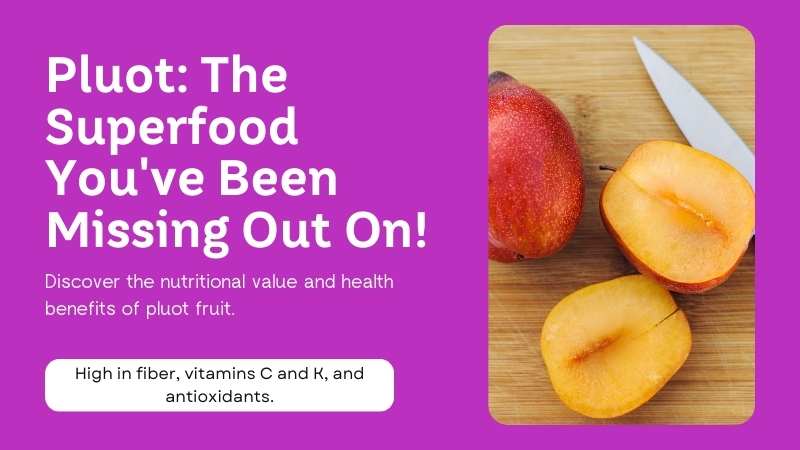
Pluot fruits are normally 75 percent plum and 25 percent apricot. However, ‘Plumcots,’ as specified by USDA, are 50 percent each of plums and apricots. [1] The pluot fruit typically tastes like a plum but is not quite as acidic. However, this relatively good source of potassium and vitamin C is considered low in calories.
Nutritional Facts Concerning Pluot Fruits
The USDA does not provide specific nutritional facts for pluot fruits, but two pluots generally weigh about 5oz. They provide 80 calories, 1g of protein, 0 g of fat, and 19g of carbohydrates. Pluots are also a good source of fiber, potassium, and vitamin C.
Pluot Nutrition Facts (Per Serving)
One serving is about two pluots, or roughly 140 grams (5 oz). Here are the approximate values.
| Nutrient | Amount (2 pluots, about 140g) |
|---|---|
| Calories | about 80 kcal |
| Carbohydrates | 19 g |
| Sugars | about 15 g (natural) |
| Fiber | 3 g |
| Protein | 1 g |
| Fat | 0 g |
| Potassium | 226 mg |
| Vitamin C | about 10% of the daily value |
| Vitamin A | small amount |
| Glycemic index | low |
One pluot has about 40 calories, so it makes an easy, low-calorie snack.
Carbs
Pluot fruits are a good source of carbohydrates. They provide 19 grams per serving of two pluots. Most carbs within the fruit (about 15 grams per serving) are naturally occurring sugars. They come along with 3 grams of fiber. With a low glycemic index and a low glycemic load, pluot fruits do not cause any spike in blood sugar levels.
Fats
Fat-free, pluot fruits provide zero grams per serving. This makes it convenient to fit into a low-fat diet, unlike most other eating plan items that encourage fat intake.
Protein
You will absorb one gram of protein while consuming two pluot fruits. You would ingest roughly the same amount of protein in two plums. Coincidentally, this is the same amount of protein you would derive by consuming two apricots. [2]
Minerals & Vitamins
There is little information about the mineral and vitamin content of pluot fruit. However, one serving is understood to contain 226 milligrams of potassium. The pluot fruit is also estimated to provide about 10 percent of the daily vitamin C requirement along with some traces of vitamin A. [3]
Calories
A single pluot fruit contains about 40 calories. This is roughly the same amount contained within two and a half apricots. Consuming one plum is also 10 calories more than you would imbibe.
Pluot vs Plum, Apricot, and Plumcot
Pluots belong to a family of plum-apricot hybrids, and the names can be confusing. Here is how they compare.
| Fruit | Mix | Taste and Feel |
|---|---|---|
| Pluot | More plum than apricot (about 75% plum) | Sweet and juicy, with smooth plum-like skin |
| Plumcot | Equal plum and apricot (about 50/50) | A balanced mix of both parents |
| Aprium | More apricot than plum | Apricot-like, with a slightly fuzzy skin |
| Plum | The parent fruit | Sweet-tart, with smooth skin |
| Apricot | The other parent fruit | Soft, mild, slightly tangy, with fuzzy skin |
Nutrition-wise they are all close: low in calories and fat, and a good source of fiber, potassium, and vitamin C.
List of 5 Health Benefits of Pluot Fruits
Pluot fruits have not been properly studied for their health benefits. However, they may provide about 70 to 75 percent of the same benefits as plums. Here are 5 health benefits of plums, but they cannot be confirmed for the hybrid fruit.
1. Reduces Cell Damage
The water-soluble vitamin C in a pluot fruit may provide certain health benefits. This vitamin mainly helps boost immunity, repair cells, and slow aging. Moreover, pluot fruit also contains phytonutrients like phenols with antioxidant effects.[4] They help prevent cell damage that can lead to aging, cancer, cardiovascular diseases, and neurodegeneration. [5][6]
2. Improves Heart Health
Pluot fruits contain soluble fiber. This fiber is well known for its cardioprotective effects. It helps in reducing bad cholesterol. Limited studies have shown that pluot fruit consumption is associated with improved cardiovascular risk factors. They have also been found to improve bone health and cognitive function. [5][6]
3. Lowers Diabetes Risk
Three cohort study results indicate that greater consumption of certain whole fruits significantly lowers the risk of type 2 diabetes. Although the study did not include pluot fruits, it did include plums and apricots. They were identified as low-glycemic fruits. It was further noted that participants who consumed plenty of fruit juice posed a higher risk of type 2 diabetes. Therefore, if your blood sugar level is a concern, primarily eat whole fruits and keep the juice intake to a minimum. [7]
4. Relieves Constipation
This is the most widely promoted health benefit of dried plums. Their potential as a constipation remedy is known. However, since pluot fruits are not consumed as dried fruit, it is unclear whether having them would provide the same relief.
5. Promotes Eye Health
Both apricots and plums contain vitamin A. This vital nutrient helps promote healthy eyesight. Therefore, the pluot fruit hybrid may provide the same benefit. [8]
Conclusion
Although there are no specific reports of pluot fruit allergy, some people develop allergies to plums or apricots. So watch out and contact your healthcare provider if you have a birch pollen allergy or react to raw pluot fruit.
FAQs
1. Are pluots suitable for weight management?
Pluots are low in fat and calories. They have about 80 calories per 5-ounce serving. They’re high in fiber, which helps with satiety and can reduce cravings. Their natural sugars satisfy a sweet tooth without the added sugars of many processed snacks, making them a good choice for weight management.
2. Do pluots contain any special antioxidants?
Yes, pluots are rich in antioxidants. They include phenolic compounds and vitamin C. These antioxidants help protect cells from oxidative stress and may slow aging. Eating antioxidant-rich fruits like pluots regularly supports long-term health.
3. Can pluots be part of a low-sugar diet?
Pluots are relatively low on the glycemic index, so they affect blood sugar more gently. While they contain natural sugars, their fiber content helps slow sugar absorption. This makes them a suitable fruit option for those managing sugar intake, though portion control is still key.
4. Is a pluot a fruit or a vegetable?
A pluot is a fruit. It is a cross between a plum and an apricot, both of which are stone fruits. So it is sweet, juicy, and eaten as a fruit, not a vegetable.
5. Are pluots good for people with diabetes?
Pluots can fit into a diabetes-friendly diet in normal amounts. They have a low glycemic index, and the fiber slows down sugar absorption, so they cause less of a spike. Eat the whole fruit rather than juice, and watch your portion size.
6. What is the difference between a pluot and a plumcot?
Both are plum-apricot hybrids. A pluot is mostly plum, about 75 percent, with some apricot. A plumcot is an even mix, about half plum and half apricot. In nutrition, they are very similar.
7. How often can you eat pluots?
A pluot or two a day is fine for most people as part of a mixed fruit diet. They are low in calories and rich in fiber and vitamin C. If you are watching sugar, stick to one or two and pair them with other foods.
References
- Departamento de Ciencia Vegetal, Centro de Investigación y Tecnología Agroalimentaria de Aragón (CITA), Avda Montañana 930, 50059 Zaragoza, Spain – https://pubmed.ncbi.nlm.nih.gov/35567242/
- U.S. DEPARTMENT OF AGRICULTURE – https://fdc.nal.usda.gov/fdc-app.html#/food-details/171697/nutrients
- Department of Biology, College of Science, Imam Abdulrahman Bin Faisal University, Dammam 34212, Saudi Arabia – https://www.ncbi.nlm.nih.gov/pmc/articles/PMC9370680/
- Bioactivity & Sustainable Development (BIODESS) Group, Department of Chemistry, Rodrigo Facio Campus, University of Costa Rica (UCR), San Pedro Montes Oca, San Jose 2060, Costa Rica – https://www.ncbi.nlm.nih.gov/pmc/articles/PMC8588404/
- Department of Pharmacy, University of Napoli Federico II, Via D. Montesano 49, 80131 Naples, NA, Italy – https://www.ncbi.nlm.nih.gov/pmc/articles/PMC8778072/
- Department of Breeding and Propagation of Horticultural Plants, Faculty of Horticulture, Mendel University in Brno, Valticka 337, CZ-691 44 Lednice, Czech Republic – https://www.ncbi.nlm.nih.gov/pmc/articles/PMC6257765/
- Department of Pharmacy, University of Napoli Federico II, Via D. Montesano 49, 80131 Naples, NA, Italy – https://www.ncbi.nlm.nih.gov/pmc/articles/PMC8778072/
- Department of Nutrition, Food and Exercise Sciences, College of Human Sciences, Florida State University, Tallahassee, FL 32306, USA – https://www.ncbi.nlm.nih.gov/pmc/articles/PMC5452226/
- Department of Fruit, Vegetable and Nutraceutical Plant Technology, Wrocław University of Environmental and Life Sciences, 37 Chełmońskiego Street, 51-630 Wrocław, Poland – https://www.ncbi.nlm.nih.gov/pmc/articles/PMC10376563/
- USDA Western Human Nutrition Research Center, Davis, CA – https://www.ncbi.nlm.nih.gov/pmc/articles/PMC4997277/
