

One does not smoke it. Neither does one swallow it. Just chew it and spit it. No smoke at all. Sounds a bit way out but that is what smokeless tobacco is all about.
One chews the tobacco and spits the brown juices every once in a while. Many like doing so. This is also equally harmful to health as burning of tobacco.
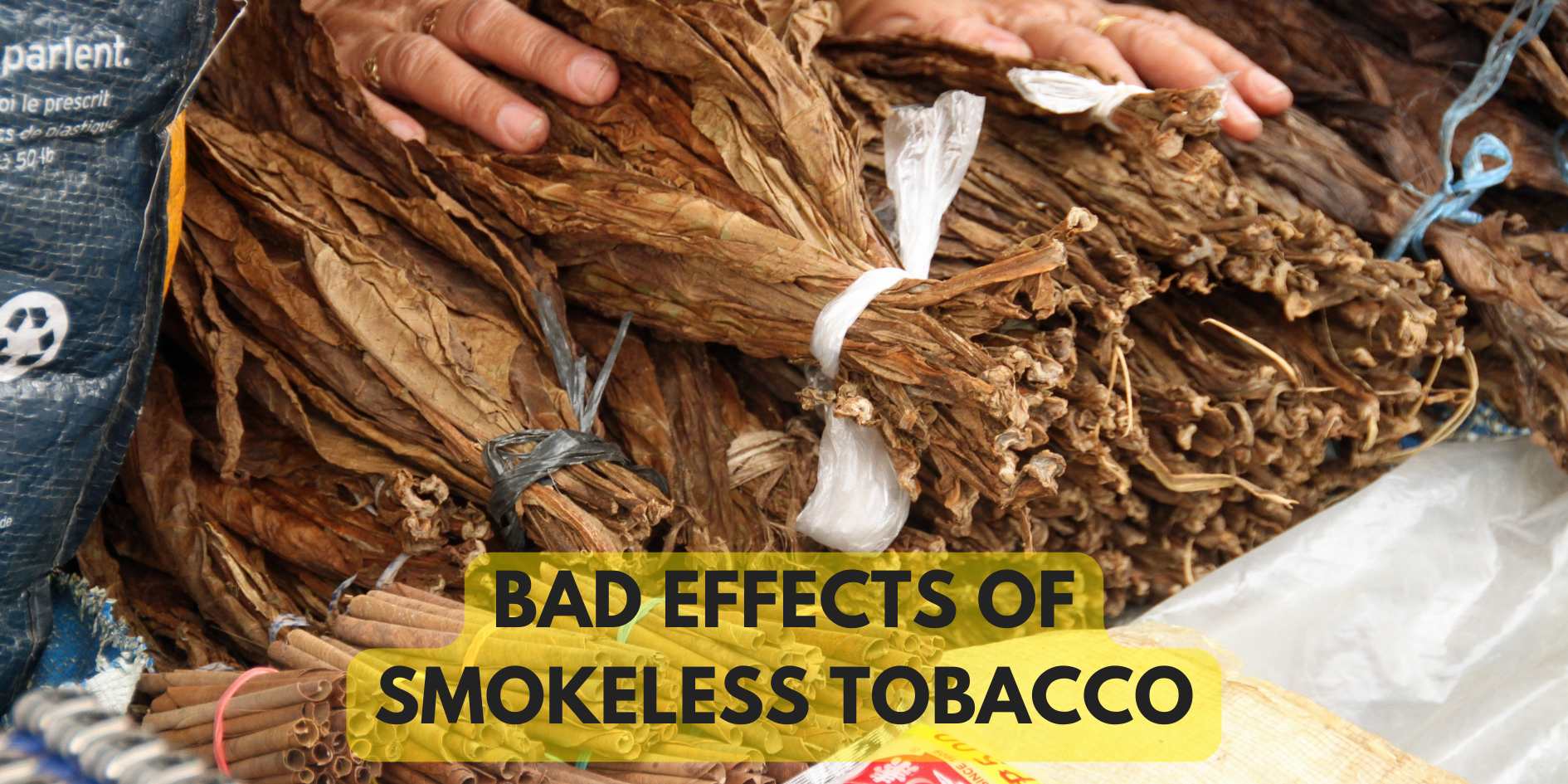
What is Smokeless Tobacco all about?
Smokeless tobacco comes in two forms- snuff as well as chewing tobacco. Snuff is made up tobacco that consists of fine-grains. It is available in the form of teabags, which the user places “dips” or “pinches” the lower lip and the gum. Chewing tobacco is available in shredded leaves forms that users place between their cheek and the gum.
In the case of both the forms the tobacco is made to “sit” for sometime in the mouth and one sucks on the juices. Once the saliva is formed one has to spit the juices out. The nicotine in the tobacco enters into the bloodstream. Nicotine, incidentally is addicted and is bad for health. One need not swallow anything.
How long has smokeless tobacco been in vogue?
People have been using smokeless tobacco for a long time. Those from South and North America have been chewing tobacco, snorting it and snuffing it for a very long time. It was also very popular in Europe and Scandinavia. In fact the word “snuff” is derived from Scandinavian term “snus”.
In the United States, tobacco chewing is associated with baseball. Players chewed the tobacco and spit it into their gloves to make a “spitball”. The latter is a special ball in which the player uses his saliva to moist the ball; to make it spin. Spitballs were banned in the 1920s. Some where around the 1950s, chewing tobacco became less popular in the US, so many baseball players were not making “spitballs” Most people started smoking tobacco rather than chewing it. In the l970s people in the US felt lighting tobacco was more dangerous so they started chewing tobacco again.
Who Chews Tobacco?
Lot of high school boys and girls chew tobacco in the US. Many of them are below 21 and half of them start around 13 years of age. Many succumb to the habit due to peer pressure. Those who are on it often go in for brands which have higher nicotine content. Adults also chew tobacco.
How Harmful is Smokeless Tobacco?
Tobacco contains nicotine which can cause much damage to health. One can suffer from serious diseases such as cancer. One might think smokeless tobacco is less harmful. But this not so. Many suffer from throat cancer or mouth cancer. One can die of orpharyngeal tumor.
Bad Effects of Smokeless Tobacco
- It can cause bad breath.
- Receding gums which results in teeth falling out.
- Cracked lips.
- Bleeding gums.
- Increase in heart rate.
- Higher blood pressure.
- Risk of heart attack.
- Brain damage.
- Cancer.
Smokeless Tobacco: Trends, Usage Patterns & Regulatory Overview
| Category | Key Insight | Supporting Data / Source | Relevance |
|---|---|---|---|
| Average Age of First Use | 13–15 years old (U.S. middle & high schoolers) | CDC Youth Risk Behavior Survey, 2021 | Early exposure increases addiction risk and long-term health burden |
| Product Strength | Some snuff products contain 3–5x more nicotine than cigarettes | National Cancer Institute, USA | Enhances dependency and complicates withdrawal |
| Flavored Variants | Over 80% of teen users prefer mint or fruit-flavored chew | Truth Initiative, 2020 | Flavors act as a gateway, masking the harshness of tobacco |
| Marketing Tactics | Heavily advertised in sports magazines and rural regions | Campaign for Tobacco-Free Kids | Targets young and less-regulated populations |
| Prevalence in Sports Culture | Baseball and rodeo athletes show 3x higher usage than general population | American Journal of Public Health | Reinforces chewing as a socially accepted “performance aid” |
| Regulatory Responses | Over 30 U.S. states restrict sales to under-21s; warning labels required | FDA, 2022 | Growing legislative pressure to curb adolescent use |
| Oral Cancer Risk | Up to 50x greater risk in long-term users | World Health Organization | Major cause of disfigurement and early mortality |
| Social Impact | Users report embarrassment due to constant spitting and oral hygiene issues | Behavioral Health Surveys, 2018–2021 | Discourages social interaction and affects self-esteem |
Smokeless tobacco sounds more convenient that lighting up a cigarette but is a messy affair. One has to keep spitting out the juices.
Though smokeless tobacco may not produce smoke, its impact on public health, youth behavior, and oral hygiene is undeniable. Continued monitoring, education, and regulation are vital to curb this silent epidemic.
FAQs: Smokeless Tobacco
1) Does gutka or khaini use impact tuberculosis recovery?
Yes, indirectly. In India, 267 million adults use smokeless tobacco. That clouds immune response and can slow TB recovery.
2) Can a single pinch pack you with more nicotine than one cigarette?
It just might. Smokeless tobacco often delivers higher total nicotine per dose compared to one cigarette. Users can get nicotine — and addiction — with alarming efficiency.
3) Do Indian children secretly become tobacco users?
Sadly, yes. In one district, 21% of high-schoolers used tobacco—mostly smokeless—and started as early as 9 years old. That’s not just a statistic. That’s alarming.
4) Are some regional smokeless products nastier than others?
Absolutely. Products like “mawa” pack 3,000 toxins—including formalin, vinyl chloride, and DDT. That’s not minor—it’s toxic overload in your mouth.
5) Does smokeless tobacco linger longer in your system than cigarettes?
Definitely. Nicotine keeps circulating well after you spit it out. It stays in your bloodstream longer than cigarette-sourced nicotine. Talk about long-haul exposure.
