

Is Himalayan salt good for you? In short, yes, in moderation. Himalayan pink salt is a natural rock salt. People also call it pink salt or Himalayan sea salt. It carries trace minerals and has a mild, clean taste. But it is still salt. So keep the amount sensible.
Flaunting a visually distinctive appearance in pale rose pink color, the Himalayan salt is highly regarded for retaining an impressive nutritional profile, as it is rich in essential minerals essential for your overall health. It is also known as pink salt and is the purest salt on the planet.
Himalayan Pink Salt at a Glance
| Detail | Description |
|---|---|
| Also known as | Pink salt, rock salt, Himalayan sea salt (in India, sold as sendha namak) |
| Source | Khewra Salt Mine and nearby mines in Pakistan, near the Himalayas |
| Colour | Pink, from a small amount of iron |
| Main content | Sodium chloride (98%) |
| Trace minerals | Iron, magnesium, potassium, calcium and more |
| Common uses | Cooking, pink salt water, bath soaks, salt lamps, salt therapy |
| Daily limit | Stay within about 5 to 6 g of salt a day from all foods |
| Best for | Flavour, a light mineral boost, and relaxing baths |
Health Benefits Of Himalayan Pink Salt
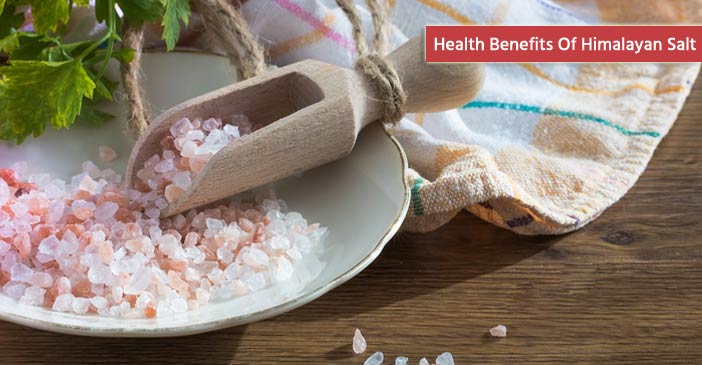
There are several health benefits of Himalayan salt, some of which are discussed below.
1. Promotes Respiratory Functions
Himalayan salt has anti-inflammatory and antibacterial properties that help it clear the excess mucus faster by loosening it, identifying and eliminating the pathogens in the air, and lowering the level of the immune system over sensitivity. Himalayan salt caves are very popular these days, and people who opt for halotherapy with these caves will have to inhale the dry salt in micronized form.
This salt therapy is also said to be a drug-free treatment for chronic bronchitis. Salt therapy is useful for long-term conditions like eczema, allergies, asthma, COPD, and bronchitis. It also improves the respiratory system health of snorers and smokers.
2. Maintains pH Balance
The Himalayan salt contains mineral contents that can maintain your body’s pH levels. When your body has the perfect pH balance with the right proportion of healthy acids and alkaline, it can do wonders for your overall body health. Having the right pH balance is important to strengthen your immunity and improve the process of digestion.
As this salt has electrolytes and sodium, it positively affects your blood’s pH level. It also controls the fluid level in your blood and neutralizes the acid to regulate the pH levels in your tissues and blood.
3. Perfect Sleep Inducer
Himalayan salt can help you enjoy a sound sleep, as it is rich in minerals. Adding it to your everyday diet will help you enjoy a good night’s sleep and rest well. It acts as a natural sleep aid and helps you overcome all kinds of irregular sleep patterns. Those suffering from sleep apnea issues can use this salt instead of table salt in their cooking to enjoy a good night’s sleep every day.
4. Keeps Away the Infections
The sodium content in the pink salt obtained from the Himalayas has the prowess to fight all kinds of infections. This salt can fight against the infection-causing bacteria to keep infections at bay. It can be a sensible option to prevent all types of skin infections. Regular intake of this salt will promote the immune system and helps the infections to heal much faster.
Including this salt in your everyday cooking will help you have a better immune system and a shield of protection against infections. You can also apply the salt on the skin infections topically or use it in your bath to prevent fungal and bacterial infections.
5. Cures Digestion Problems
The saturated solution made from Himalayan salt and purified water is called sole. Using this sole solution every day will kindle the peristalsis of your digestive system, maintain the digestive organs’ health, and maintain stomach acid levels. Regular sole use will induce digestive fluid production in the pancreas and the liver, maintain a perfect acid and alkaline balance, and improve metabolism.
6. Acts As A Natural Steroid
Himalayan salt is a great natural alternative to asthma steroids. When you inhale the air saturated with this salt, its particles pass through your respiratory system. Its antimicrobial and antibacterial properties can detox and purify the sinuses and lungs.
Inhaling this salt helps lower asthma symptoms, control seasonal allergies by clearing the sinuses, clearing the congestion in your chest, and promoting lung health in people who have developed cystic fibrosis.
7. Rich in Minerals
Himalayan pink salt contains minerals and trace elements like calcium, magnesium, potassium, copper, and iron. These minerals help in regular body functions and assist in maintaining electrolyte balance. Below is the table of minerals present in the salt.
| Mineral | Content (per 100g) |
|---|---|
| Sodium | 36800 mg |
| Chloride | 59000 mg |
| Potassium | 320 mg |
| Calcium | 480 mg |
| Magnesium | 520 mg |
| Iron | 8 mg |
| Zinc | 0.3 mg |
| Copper | 0.6 mg |
| Manganese | 0.9 mg |
| Chromium | 0.1 mcg |
| Selenium | 0.1 mcg |
| Iodine | 10 mcg |
Other Health Benefits of Of Himalayan Pink Salt
Himalayan salt also offers additional health benefits such as:
- Regulates the water level in your body to promote overall functions
- Supports adrenal and thyroid functions
- Lowers the symptoms of aging
- Maintains an overall balance in the hormones for women and men
- Aids vascular health
- Reduces leg cramps
- Promotes vascular health
- Improves cellular energy
- Promotes the levels of blood sugar
- Promotes bone strength
- Improves the libido
- Offers excellent circulatory support
- Improves the gallbladder and kidney health
Himalayan Salt Benefits for Women and Men
Himalayan salt benefits for women
Pink salt gives sodium and trace minerals, helps with hydration and electrolyte balance. Good electrolyte balance assists with tiredness and muscle cramps. Women can take a warm glass of pink salt water or a warm salt bath to relax during their period. This eases cramp discomfort a little. It is a comfort habit, not a cure. There is no strong proof that salt treats menstrual problems. If you are pregnant or monitor your blood pressure, keep your salt low and ask your doctor first.
Himalayan salt benefits for men
For men, the story is almost the same. Sodium and trace minerals help replace what one loses in sweat. That matters after a workout or a hot day. A pinch of pink salt in water works like a simple, low-cost electrolyte drink. It supports hydration and energy. It is not a supplement for strength or performance, though. Keep the portion small if you have high blood pressure or a heart condition.
Pink Salt Water (Sole) Benefits and How to Use It
Pink salt water is often called sole water. It is just water fully mixed with pink Himalayan salt. Many people drink a small amount in the morning. They use it for hydration, steady energy, and better electrolyte balance.
Here is a simple way to make it. Fill a jar about one quarter with pink salt. Top it up with clean water. Let it sit overnight. The water can hold only so much salt, and the rest stays at the bottom. That means the water is fully saturated. In the morning, add one teaspoon of this salt water to a glass of plain water and drink it.
Be honest about the claims, though. Research on sole water is limited. Benefits like deep detox or better sleep are not well proven (Harvard Health). And sole water still adds sodium. So skip it if you have high blood pressure, kidney problems, or a heart condition. When in doubt, check with your doctor.
Is pink Himalayan salt healthier than regular salt?
There is no clear evidence that pink Himalayan salt is healthier than regular salt. Pink Himalayan salt is mined in the Himalayas and is considered pure and contaminant-free. Some people believe it is healthier because it contains trace minerals not found in regular salt, but little scientific evidence supports this claim. However, people who take it regularly vouch for the immense benefits it brings them.
What are the side effects of taking Himalayan salt?
No known side effects are associated with consuming pink Himalayan salt in small amounts. However, it is essential to consume salt in moderation, as too much can lead to high blood pressure and other health problems. The American Heart Association recommends that adults consume no more than 2,300 milligrams of sodium per day, about one teaspoon of salt. Consuming more than this can increase your risk of developing high blood pressure and other health problems.
Does pink salt raise blood pressure?
Consuming too much salt can lead to high blood pressure, a risk factor for heart disease and stroke. No proof suggests that pink Himalayan salt is more or less likely to raise blood pressure than regular salt. However, 2,300 milligrams of sodium per day is enough for the body, and any more salt than that can lead to health issues.
Mineral Composition of Himalayan Pink Salt
| Mineral | Content per 100g |
|---|---|
| Sodium | 36.8g |
| Chloride | 54.4g |
| Calcium | 118mg |
| Potassium | 17mg |
| Magnesium | 4mg |
| Iron | 0.07mg |
| Zinc | 0.05mg |
| Copper | 0.1mg |
| Manganese | 0.5mg |
As per a study done by Nutrition Research Australia, a person should not consume more than 6 g of pink salt per day from all the food sources.
Himalayan Salt vs Sea Salt vs Table Salt
| Type | Where it comes from | Processing | Iodine | Good to know |
|---|---|---|---|---|
| Himalayan pink salt | Rock salt mined in Pakistan | Very little | Low or none | Trace minerals give the pink colour |
| Sea salt | Evaporated sea water | Little | Low, unless added | Trace minerals, coarse texture |
| Table salt | Refined from mined salt | Heavy, with anti-clumping agents | Added | Plain sodium chloride |
One thing to keep in mind. By weight, all three give you about the same sodium. A teaspoon of pink salt and a teaspoon of table salt are very close (WebMD). So the smart move with any salt is the same. Use a little, not a lot.
Usage and Applications of Himalayan Pink Salt
| Application | Details |
|---|---|
| Cooking | Seasoning and finishing dishes, unique flavor. |
| Skincare | Bath salts and scrubs for exfoliation and relaxation. |
| Air Purification | Salt lamps to purify air and boost air quality. |
| Respiratory Health | Salt inhalers for asthma and allergy relief. |
| Decorative | Salt blocks for serving and cooking gourmet dishes. |
| Electrolyte Balance | Natural electrolyte drink for hydration and energy. |
| Bathing | Dissolved in bathwater for muscle relief and relaxation. |
Myth vs. Reality Of Himalayan Pink Salt
| Myth | Reality |
|---|---|
| Himalayan salt replaces the need for iodine. | It contains less iodine than iodized salt. It cannot act as a complete iodine source. |
| Improves hydration. | No evidence that it hydrates better than other sodium sources. |
| Free from toxins and pollutants. | Less exposed to pollution. It is not completely contaminant-free. |
| Lowers blood pressure more than regular salt. | Contains sodium chloride. Take it in moderation. |
| Contains very high mineral levels. | Minerals in the salt are not very high as depicted. It is not a substitute for a well-balanced diet. |
Key Facts About Himalayan Pink Salt
- Origin: Mined from ancient salt deposits in the Himalayas
- Color: Pink hue due to trace minerals like iron
- Mineral Content: Contains over 80 trace minerals, that includes potassium, magnesium, and calcium
- Texture: Coarse or fine, with a crunchy texture
- Culinary Use: Used as a finishing salt and in cooking for flavor
- Health Benefits: Aids in hydration and balance electrolytes
- Non-Culinary Uses: Spa treatments, salt lamps, and baths
- Unique Feature: Unrefined and free from additives
- Storage: Keep in a cool, dry place
FAQs on Himalayan Pink Salt
What is the history Of Himalayan Pink Salt?
The Himalayan crystal salt is made from the crystallized ancient salt sea beds buried under the deep layers of ice, lava, and snow for 200 million years. Later, the Himalayan range that grew over this salt bed protected and preserved the salt by maintaining an untouched, pollution-free environment. The salt is mined at a depth of 5000 feet beneath the Himalayan range, which makes it 99% pure than the other salt forms. Now, this salt is mined from the foot of the Himalayas in Pakistan.
Why Himalayan Salt Is Healthy?
The locals living in its place of origin refer to Himalayan salt as “white gold,” as it consists of 84 natural minerals and elements like iron, magnesium, phosphorus, potassium, chloride, and calcium, which serve as essential for human health. This salt gets a faint pink hue due to a small amount of iron oxide. It also has traces of copper, zinc, iodine, and selenium.
What is the difference between Himalayan Pink Salt and Table Salt?
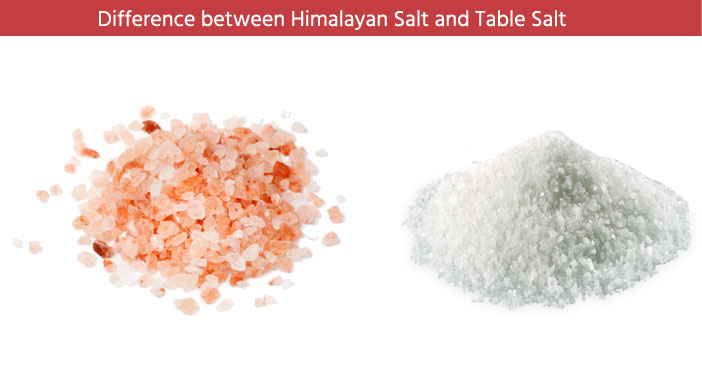
Compared to regular table salt, Himalayan salt is much healthier and more balanced. The pink salt is mined manually to retain its mineral content, while the table salt is mined using unnatural methods and undergoes heavy processing procedures. Regular table salt contains 97.5% to 99.9% sodium chloride content, whereas Himalayan salt has only 87% sodium chloride. Plus, table salt has just sodium, and iodine is added. It can be dangerous to your health, as it is processed with anti-clumping agents and is bleached with toxic ingredients.
Himalayan salt is undoubtedly the best among the salt choices and is widely used for therapeutic and cooking uses. Himalayan salt indeed has a lot of minerals, but it is still high in sodium levels. Ensure you don’t overdo it, as using too much salt in your diet can cause high blood pressure. When used in moderation, this pink salt can offer several health benefits.
Is Himalayan salt good for you?
Yes, when you use it in moderation. It is less processed than table salt and adds trace minerals and good flavour. But those minerals come in tiny amounts, so do not expect a big health boost from them (WebMD). The real trick with any salt is to keep the daily amount low. Used that way, pink salt fits fine into a healthy diet.
Is Himalayan pink salt the same as rock salt or sea salt?
Pink Himalayan salt is a rock salt. In India it is often sold as sendha namak. It is not a true sea salt. Sea salt is made by drying out sea water, while pink salt is mined from the ground. Some brands still label it “Himalayan sea salt” because of how the salt beds formed long ago. But it comes from a mine, not the sea today.
Is Himalayan salt good for women and during periods?
It does helps in small ways. The sodium and trace minerals support hydration and electrolyte balance. This eases tiredness and cramps a little. Some women find a warm salt bath or warm salt water relaxing during their period. It is a comfort habit, not a treatment. If you are pregnant or watch your blood pressure, keep your salt intake low.
Does Himalayan pink salt help with anti-aging?
It does not help with anti-aging on its own. In a bath or scrub, pink salt gently exfoliate and leave skin feeling fresh. Good hydration and minerals also support healthy skin. Remember, no salt can reverse aging. Sleep, sun protection, water, and a balanced diet do far more for your skin.
Key Takeaways
- Himalayan pink salt is rich in essential minerals.
- Improves respiratory functions and maintains pH balance.
- Acts as a natural sleep aid and helps immune function.
- Helps in digestion. Works similarly to natural steroids to support respiratory health.
- Contains minerals like sodium, chloride, potassium, calcium, and magnesium.
- Excessive intake may lead to medical problems such as high blood pressure.
- It is extracted from salt beds in the Himalayas. The salt is pure and less polluted.
- Contains less additives than table salt and has an impressive and unique mineral profile.
- Use in moderation to enjoy potential health benefits without negative effects.
