

Palm oil comes from the palm kernel and is highly saturated. Many people consider palm oil healthy, and it is widely used in cosmetic products. Palm oil is also used in many food products. Although it has been used primarily in soaps and moisturizers, palm oil is increasingly used to replace coconut oil in many food products.
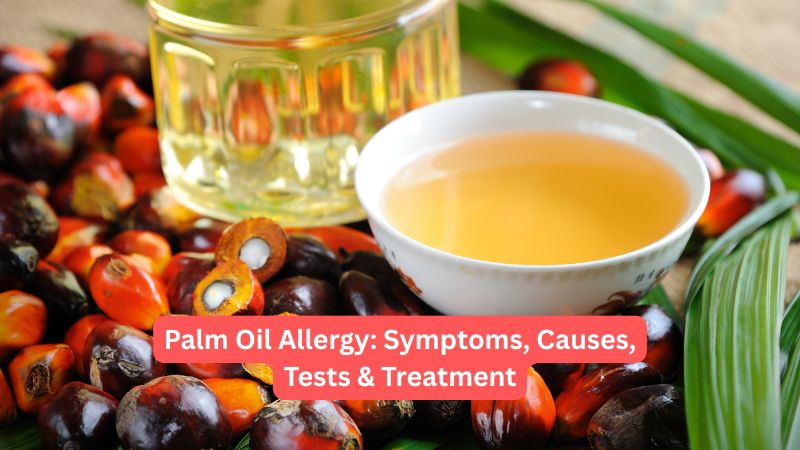
Because palm oil and coconut oil come from kernels, they are difficult to distinguish by taste. Also, in recent years, palm oil use has increased significantly, raising the incidence of palm oil allergy.
Palm Oil Allergy at a Glance
Palm oil is pressed from the fruit pulp of the oil palm tree (Elaeis guineensis). Proteins trigger food allergies, and refined palm oil contains very little protein. Because of this, true palm oil allergy is uncommon, and palm oil is not on the list of major food allergens. Some people still react, most often to unrefined palm oil or to palm oil ingredients in skin and hair products. If you think palm oil affects you, an allergist can test and confirm the trigger.
| Question | Short answer |
|---|---|
| What is palm oil? | Oil from the fruit pulp of the oil palm. Palm kernel oil is a separate oil from the seed. |
| Is it a common allergen? | No. It is not a major food allergen, and true palm oil allergy appears rare. |
| Why is allergy uncommon? | Allergy is caused by proteins, and refined palm oil has very little protein. |
| Who might react? | Some people react to unrefined palm oil, or to palm oil ingredients in cosmetics. |
| Is it linked to nut allergy? | No. Oil palms are not related to peanuts or tree nuts. |
| What should I do if I react? | Stop using the product, read labels, and see an allergist for testing. |
Does Palm Oil really causes Allergy
The primary cause of food allergies is protein content. Palm oil generally has a very low protein level, so allergic reactions may be rare. Extensive clinical studies have not been done in this regard; however, coconut, a product of palm trees (though of different species), has proven allergic reactions. However, unrefined palm oil might not fall in this category, and some people might be allergic to it.
Refined vs Unrefined Palm Oil and Allergy Risk
How palm oil is processed makes a big difference to allergy risk. This is the single most useful thing to understand about palm oil and allergy.
Refined palm oil is cleaned, bleached, and deodorized. Refining strips out almost all of the plant protein. Studies on refined vegetable oils show refining can cut protein by around 100 times. With so little protein left, refined palm oil rarely sets off an allergic reaction.
Unrefined or crude palm oil is less processed. It keeps more of the natural plant proteins, so in theory it is more likely to trigger a reaction in a sensitive person.
In the United States, highly refined oils are treated as low risk in law. Under the Food Allergen Labeling and Consumer Protection Act, highly refined oils made from major allergens do not have to be labeled as that allergen. This is because they carry only trace protein.
Palm Oil Allergy or Food Intolerance?
Not every bad reaction to a food is an allergy. A true allergy involves the immune system and IgE antibodies. An intolerance does not, and it is usually about digestion.
If palm oil seems to upset your stomach, another ingredient in the same food may be the cause, not palm oil itself. Palm oil is a low FODMAP food, so it is not a common cause of gas or bloating. An allergist can help tell a real allergy apart from an intolerance, which changes how you manage it.
Symptoms of Palm Oil Allergy
- Skin reactions: Itchy skin, hives, eczema, or rash.
- Digestive symptoms: Nausea, vomiting, stomach cramps, diarrhea.
- Respiratory problems: Wheezing, coughing, or shortness of breath.
- Swelling: Swelling of the lips, tongue, face, or throat (can be life-threatening if it leads to anaphylaxis).
The primary symptoms of this allergy vary from one person to another. If palm oil causes an allergic reaction, it can take the form of contact dermatitis or a food allergy. Contact dermatitis symptoms include an itchy rash, hives, skin inflammation, itchy eyes, and blisters. If the allergic reaction is caused by ingesting palm oil, it can cause sinus congestion, runny nose, watery eyes, wheezing, coughing, swelling in the mouth and face, and other reactions. In a severe condition, a person may suffer from anaphylactic shock, which might be fatal. The most common symptoms that are common to all types of food allergies are allergic rhinitis and asthma, and it is true with this too.
How Is Palm Oil Allergy Diagnosed?
Don’t guess a food allergy on your own. A doctor confirms it, because the symptoms overlap with many other conditions. An allergist may use one or more of the following.
Skin Prick Test
A small amount of the suspect substance is placed on the skin, which is then lightly pricked. A raised itchy bump within about 15 to 20 minutes suggests sensitivity.
Specific IgE Blood Test
A blood test looks for IgE antibodies to a suspected trigger. It is useful when skin testing is not possible.
Patch Test for Skin Reactions
If your rash is from creams or soaps, a dermatologist may use a patch test. You wear small patches with test substances on your back for about two days to identify the exact ingredient.
Supervised Oral Food Challenge
This is the most reliable food allergy test. Under medical supervision, you eat increasing amounts of the food to see whether a reaction occurs. It is only done in a clinic set up for emergencies.
Prevention of Palm Oil Allergy
Since this allergy can be life-threatening, it is essential to watch closely for any symptoms. Palm oil allergy symptoms are usually sudden and can cause severe problems, so watching for them closely is very important. See an allergist as soon as you can. If your allergy symptoms are not severe, keep track of them so that if you experience them again, you know you were exposed to palm oil. Since palm oil is commonly used in soaps and detergents, read labels carefully to ensure what you use does not contain palm oil. Most people with palm oil allergies can consume small amounts of the oil without severe side effects or allergic reactions. However, you should determine how much palm oil you can safely consume without causing severe reactions. Usually, sufficiently refined palm oil that has been heated can have the allergen removed. Such oil poses no threat to you.
People with multiple allergies should always carry an EpiPen in case they need it unexpectedly
Palm Oil in Cosmetics and Contact Dermatitis
Many palm oil reactions are on the skin, not from food. Palm oil and its derivatives are common in soap, shampoo, lotion, and makeup. A reaction here is usually contact dermatitis, which shows as an itchy red rash where the product touched the skin.
The real trigger might not be the palm oil itself, but a fragrance, preservative, or other ingredient in the product. A patch test with a dermatologist pins down the exact cause. Until the test is done, stop the product and switch to a simple, fragrance-free option.
Is Palm Oil Safe With a Nut, Soy, or Peanut Allergy?
This is a common worry, and the botany helps answer it. Oil palms are not related to peanuts or to tree nuts, so palm oil is not a nut allergen and is not expected to cross-react with nuts.
Palm oil is also a different plant from soy, peanut, and other seed oils, so it does not contain their proteins. If a mixed frying oil is used, it could contain more than one oil, so people with a specific oil allergy should still read labels or ask. If you have a food allergy, talk to your allergist about which oils are safe for you.
Other Names for Palm Oil on Labels
Palm oil hides under many names, which makes labels hard to read. If you are trying to avoid it, watch for these terms. Some, like palmitate, can also come from other plants, so check with the maker if you are unsure.
| Name on the label | What it is |
|---|---|
| Palm oil, palm fruit oil | Oil from the fruit pulp of the oil palm. |
| Palm kernel oil | Oil from the seed of the oil palm. |
| Palm olein, palm stearin | Fractions of palm oil used in foods and frying. |
| Elaeis guineensis oil | The plant name for palm oil, common in cosmetics. |
| Sodium palmate, sodium palm kernelate | Palm-based ingredients used in soap. |
| Palmitate, sodium palmitate, glyceryl stearate | Often palm-derived, but can come from other plants. |
| Vegetable oil | May include palm oil when the source is not named. |
When to See a Doctor
Mild skin or stomach symptoms can often be watched at home. See a doctor or allergist if:
- You get repeated rashes, hives, or stomach upset after the same product or food.
- Your symptoms are getting worse over time.
- You want a test to confirm the real trigger.
- You have other allergies and want an action plan.
Call emergency services right away for any sign of a severe reaction, such as trouble breathing, throat or tongue swelling, dizziness, or fainting. This can be anaphylaxis, which needs adrenaline and urgent care.
Uses of Palm Oil
Palm oil is commonly used for making soaps. Sometimes, palm oil is also used in making fancy candles, but in recent years, it has also been used to manufacture food products. Palm oil is used to make flavored mayonnaise, margarine, and processed foods. Palm oil is also used for cooking oil instead of coconut oil. Palm kernel oil is red and has a tropical taste, so it is used interchangeably with coconut oil. Palm oil is also used in detergents and industrial lubricants.
People with nut or cottonseed oil allergies are also more likely to develop palm oil allergies. These people should avoid palm oil as much as possible.
Palm Oil Allergy FAQs
How do you know if you are allergic to palm oil?
In case you are allergic to palm oil, you may experience severe skin reactions when exposed to it. These include redness, peeling, and a burning sensation. In some cases, people might also develop wheezing and difficulty breathing. If you experience any of these symptoms, seek medical attention immediately. Check labels and choose products that do not contain this ingredient, always.
Is palm oil a nut allergy?
Palm oil is not a nut allergy but can be an issue for people hypersensitive to certain nuts. In general, palm oil is made from the oils of tropical palms, heated until they turn brown, then refined. This process destroys many of the fatty acids in the palm kernel, causing some people with nut allergies to react adversely when exposed to Palm Oil products. However, this usually won’t cause an allergic reaction if you are also sensitive to other types of oils.
What food contains palm oil?
Palm oil is a common food ingredient found in many processed foods and consumer goods. It is used as a substitute for other oils, such as butter or olive oil. It is highly heat-stable, which makes it great for cooking and baking.
Many common foods, such as bread and cereals, cookies and cakes, salad dressings and dips, chocolates, and ice cream, contain traces of palm oil. Palm oil is a vegetable-based fat that is extracted from the fruit of the African palm tree. It has become controversial because of its environmental impact.
More Frequently Asked Questions
Is palm oil allergy common?
No. Palm oil is not a major food allergen, and confirmed cases are rare. Unrefined palm oil or palm oil ingredients in skin products generally cause the reactions.
Can palm oil cause eczema or skin rashes?
It can in some people, usually as contact dermatitis from soaps, lotions, or makeup. The trigger may also be another ingredient in the product, so a patch test helps confirm it.
Is refined palm oil safer than unrefined for allergies?
Yes. Refining removes almost all protein, so refined palm oil is far less likely to cause a reaction than crude or unrefined palm oil.
Do food labels have to list palm oil?
Palm oil is usually named in the ingredient list. But highly refined oils made from major allergens are exempt from allergen labeling rules in the US because they carry only trace protein.
Is palm oil in baby formula a problem?
Palm oil, often as palm olein, is used in some formulas as a fat source. This is a digestion and nutrition topic, not an allergy one. If you have concerns about your baby, ask your pediatrician.
What should I do during a severe reaction?
Use an adrenaline auto-injector if one has been prescribed, then call emergency services. Severe swelling or trouble breathing is a medical emergency.
References
- U.S. FDA, Food Allergen Labeling and Consumer Protection Act (FALCPA) of 2004, highly refined oil exemption:
- Crevel RWR, Kerkhoff MAT, Koning MMG. Allergenicity of refined vegetable oils. Food Chem Toxicol. 2000 (PubMed)
- Children’s Hospital of Philadelphia (CHOP), on highly refined oils and food allergy
- Oklahoma State University Extension, Properties of Palm Oil (source and composition)
- Best Food Facts, expert Q&A on palm oil and refined oils (Dr. Steve Taylor, FARRP)
- Allergy Resources, Palm Oil allergen profile (profilin and oleosin proteins, not nut-related)

28 Comments
I have a severe and immediate reaction and there is no mistaking that it is palm oil. I react when eating a tried and true food if it changes its recipe ( Gingernuts NZ changed their vege oil to palm oil, although there had been complaints about a taste change we were assured it was the same recipe – one bite did it, fortunately able to spit it out and take antihistamine which mitigated the symptoms such that I could just put up with the breathing issue, got a shock to read the ingredients). I have a massive outpouring of mucus saliva such that I choke and cannot breathe easily and vomit and am unable to speak, can’t see and fall down. It is immediate. I did not have problems in early life because the use of palm oil was not very common, but it seems to be in everything now. I have had to give up Oreo cookies (sold in NZ, although it seems to depend on where they are made). A single bite of a tim tam at work caused such a reaction in the early days that workmates rang an ambulance. Because I have avoided it for so long I can pretty much smell it in many foods. I avoid cake slices in cafes. I have to have ice cream in a tub because cones have palm oil. I have avoided any food that has vegetable oil listed without identification, but a recent hint is that if it has vegetable oil but not saturated fat then it isn’t palm oil but some other like soy or sunflower. Fortunately because of Palm Oil being politically incorrect I have noticed more and more items not using it. Thanks for this site.
Hi Marg,
I live in the US but originally from India and allergic to Palm Oil as well as artificial preservatives and colors. When I read your post, I know exactly how you feel. Growing up in India I am used to having coconut oil, but never been allergic to it. Palm oil on the other hand causes my histamines to act up while creating my throat to start constricting. Within a couple of days, I have full blow infection of my tonsils and at that point my only cure is a course of antibiotics. Just as you have noticed with Oreo cookies, Snickers bar switched from Soybean oil to Palm oil as well. I did try a Snickers thinking nothing will happen, my allergic reaction came quickly. Unfortunately, the use of Palm oil has been on the rise as it cheap. European chocolate makes had switched a while ago, and now US companies are moving in the same direction. I have a home remedy for my allergies. After eating something that contains Palm oil and / or preservatives, I immediately take a warm salt water gargle. This has stopped my allergies from taking hold. Although, this is not a fool-proof method, it does work most of the time. It is extremely frustrating to know that Palm oil despite being unhealthy is being used for a variety of food products. The main reason for this rise is the removal of trans fat from baked and fried food items. I am very happy that this site was setup.
I recently bought microwave popcorn at our local health food grocery. I made it, sat down to enjoy and immediately my tongue felt like it was irritated and then became more like a little burning sensation. I looked at the box of popcorn and saw that palm oil was the primary oil used in the product.
I then tried a Trader Joe’s pumpkin scone and had a similar reaction. When I looked at the ingredients, sure enough, there was palm oil in the mix. I am sorry to see so many products using palm oil and I wonder how to bring attention to the merchants who seem to think this is the newest and best oil to use. It is NOT. In fact, any oil that is not organic seems to bear the question of what was used on the safflowers, olives, soy, etc. in its early development. Anyone been able to bring attention to the increasing use of palm oil in our food products? IF so, how?
Finally I think I have discovered what gives me hives, bright red cheeks, breathlessness and an increased pulse rate – Palm oil !!
This explaines why I have never been able to isolate the food stuff that causes this reaction. For months I would be ok, then suddenly all the above symptoms would return.
Today I ate white chocolate left over from xmas, within an hour I had a reaction, then I remembered I felt the same a week ago when I had ate the white chocolate. Today I had not eaten anything else.
Following googling white chocolate, palm oil and the amount of convenience food which contain Palm oil I am completely convinced this is the culprit !!!
I’m so happy and from now on will be examing packet or tin of food I buy !!!
Lyn Lawrence on January 23rd, U.K.
I identified Palm oil as an allergen many years ago. (I think that it has been in food products for as long as 20 years).I get disfiguring red. itchy lumps on my face and upper body. I make almost all my own food. Although I buy no food products containing it, there are times when I’ve eaten out when I know that the food must have contained palm oil. I avoid tree-nuts now too, because they too have the same effect, although to a lesser degree.
I am failing to find anyone to test me for this, largely, i feel. because Palm oil is not considered to be an allergen. It is in almost all processed food.—Bread, Stock cubes, Mayonnaise, Virtually all biscuits and Sweets, Try looking at the foods in your supermarket.!
I developed those disfiguring red lumps on my face in my early 70’s. I don’t remember an itch, but they were like neon pimples that didn’t come to a head, and they took ages to disappear. I eliminated all possible soaps and cosmetics and finally did a food log. It was clearly dairy foods, so I gave up anything with dairy and my skin was clear. I wonder if the allergen was milk or the addition of palm oil to the milk.
Palm Oil can cause cancer? Gail, this is a major problem. Looks like there has been some attention in Italy.
http://www.theverge.com/2017/1/13/14266356/nutella-cancer-efsa-study-ferrero-palm-oil
I laugh at Nuttela saying “Making Nutella without palm oil would produce an inferior substitute for the real product, it would be a step backward”. I can bet that the original Nutella was NOT made with palm oil. Bottom line, matters for these companies and we need to take action.
Hi I’m happy to find that there are some other people who is allergic to palm oil as can’t convince anyone that the food I’m troubled with is palm oil:) I get non-stop headache for three days with a single bite from a shop bought cookie. What’s worse is most gluten-free products made with Palm oil:(
Palm oil reacts with my stomach acids as a small allergy THEN creating pain via gas reaction which pushes on my lungs and kicks my asthma off right away.
Like you Denise I struggle, most allergen free foods have another and my list of allergens are exhaustive and thus prepackaged foods are mainly expensive, I worked out a minimum £20 a day just to eat prepackaged all-allergen free foods.
I had to really get back to taking time to cook food to erase all allergens except nuts (the only one I don’t react to?) and I’ve lost 3 stone in 2 years by removing all these allergens by cooking most my meals from start & my asthma no longer has me bedridden most of the time.
Does anyone know where I can buy red palm oil in the U.K. ?
I assume it is processed Palm Oil as I didn’t even know red palm existed until I read this haha!
I get the 3 day headache as well…It’s in almost everything!!! I take 2 benadryl immediately upon suspicion of consumption and while it makes me sleepy, it usually lessons it or makes it go away completely. Hope this helps someone else as this is the only thing I have found to be effective.
We think Palm oil causes ours sons Skin Rash and Asthma, The doctors said its not but every time he eats food with palm oil in he comes up in a red itchy rash and blotches, face, tongue, it last a few days, We have been looking at all foods and noticed that palm oil is in loads of foods, we are now going back to basic food and good old fashioned butter.
I have similar reactions when exposed to palm oil and I too had doctors telling me it wasn’t the palm oil, even though I was diagnosed with palm allergy. I switched back to butter and it has really helped. Also, watch the soaps and shampoos. Most of them have palm derivatives in them .
My wife developed food allergies late in life (including tree nuts and “birch” allergies, ie., pit fruits, strawberries) and…you guessed it… PALM OIL. This took a while to figure out. A few bites of a baked good or other food with palm oil causes itchy mouth/throat and, in her case, a drop in blood pressure which in one case led to a fainting spell (after having a bite of a brownie made by a friend! She used margarine as the fat, and most margarines now are made with palm oil.)
As others have pointed out, as the least expensive recourse after the banishment of transfats during the past few years, palm oil is everywhere. It has become very difficult to avoid when eating any kind of processed or baked food, ice cream, baking mixes, etc. etc. etc. Virtually all baked goods have palm oil or perhaps margarine made with it. One day my wife had grilled chicken at a restaurant and got sick; turns out the oil in the marinade was palm oil!
Agree, back to making all our own food and good old butter! There are also some margarines still made with soybean oil.
palm oil has many different names. magnesium stearate comes to mind because it is in all vitamin pills and or powdered capsules. it is for the machinery so the powder does not stick to the equipment.
Please read the part “While many chocolatiers, including Lindt, argue that any presence of vegetable oils in chocolate apart from cocoa mass would be a mark of inferior quality, palm oil is still an essential ingredient for creating soft centres, toffees and nougat. And despite allowing Nestle to reduce the saturated fat of KitKats by 10% in 2013 by using palm oil to replace trans fatty acids, the ingredient has a 50% saturated fat content that makes it a target for vociferous health campaigners, particularly in Scandinavia.”
As I said before, banning trans fatty acids has resulted in increased Palm Oil usage!! What a nightmare for people (like me) who suffer from Palm Oil allergies.
Thanks,
Raj
I have been diagnosed with palm allergy. I originally thought that was allergy to palm tree pollen since I live around so many. I have always had issues with increased mucus and occasional choking when eating but it wasn’t until I saw palm oil on the side of margarine tub that I had been using that I made the connection. I have since stopped eating foods that have palm oil and have been feeling much better. I also had dealt with sores on my scalp and hives with small bumps on my skin for years. The doctors never seemed concerned and acting like it was normal. I switched to soaps and shampoos that don’t contain palm and the scalp and skin issues cleared up. Hopefully word will get out to more people that are suffering and don’t know why.
I finally googled “palm oil allergy” and found this website. My reaction to palm oil is a weird one — I feel like I want to jump out of my skin, and can’t sleep. Kind of a buzzed feeling. I had suspected palm oil as being a problem for a while and had avoided it, but the other day I was in a hurry and missed it when reading the ingredient list for a box of cookies. Have now hardly slept for 3 nights, and wonder how long it will take this to get out of my system (yawn…!). I also have a number of other food sensitivities (including coconut oil), so it is becoming more and more difficult to find store-bought foods I can eat, especially with the rise in palm-oil use. Back to making cookies from scratch, I guess . Hey, they taste better anyway! But it is time-consuming, and difficult to find the time, since I already cook meals from scratch.
My wife has a Palm oil intolerance which causes her to ingest air to the point of being full of trapped wind/gas and does nothing for her twitchy legs. (10 years or more of this)
What we know about Palm oil. 1) Learn to speed read labels, avoid mono and DI-glycerides of fatty acids (unless the state what they are derived from. 2) Almost every manufactured product pastry, bread cakes, biscuits, yogurts, stock cubes, pizzas, pies, savory biscuits and more contain it, 3) Fresh fruit (citrus in particular) are coated in wax which contains palm oil. 4) If its cheap food it will probably have palm oil in it. 5) Avoid Sterates and obviously Palmates 6) Learn to cook you have to to avoid it. 7) Don’t buy or use pre-pared ingredients, pastrys, sauces ketchups, relishes, stock cubes as above.
Kathy, Indiana
My reaction to palm oil is individual red fluid filled blisters They can be very itchy. I’ve been allergic to papaya since 1985. This was facial swelling with eyes swollen shut. Next I developed a gluten allergy which appeared over New Years Holiday 2000. As soon as I could get to my dermatologist she diagnosed me with Dermatits Herpetiform. She sent three full thickness lesions for biopsy. The lesions looked like marbles under my skin with fluid filled blisters on top. They covered my arms and legs symmetrically and nothing relieved the itching. They have left some scars. She treated me with steroids and Dapsone for 9 months. I’ve eaten gluten free x17 yrs. I have since tested positive for Celiac and so has my granddaughter. I am allergic to vinyl, coconut, fresh tomatoes,and many weeds and pine products. If any of my history could help someone else I would be glad to share more.
I am not sure if I have this allergy or not but I suspect it. I have recently reacted to popcorn, mayonnaise, and Cheezit’s.
The reaction is typically immediate and I get flu like symptoms such as severe headache, body aches, lung tightness and fever like hotness to skin. These symptoms will last 5 to 10 hours and can be very debilitating.
Has anyone else experienced a reaction like this?
My doctor diagnosed me with a palm oil intolerance over ten years ago. I have sudden and violent episodes of diarrhea any time I eat it. It hides in most desserts and processed foods. As soon as I started to eliminate the palm oil, I had no diarrhea. Any time I do, I go back and look at what I had eaten. Almost every time it is palm oil, or palm kernel oil. It also hides in milk as vitamin d Palmitate. I have switched to whole milk because for some reason they add vitamin D to whole milk without the palmitate. I have also found out, the hard way, that when I find brands that do not use palm oil, after a while they may change their ingredients and switch to palm oil. I also have the same reaction to coconut oil.
I have suffered for a few years and finally checking ingredients discovered the dreaded palm oil caused my symptoms. After eating it without realising I get incredible wind – violent flattened. Followed by feeling stomach cramps, diarrear repeatedly with sickness can go on for days. Lack of sleep tossing and turning with high temperature until my body has finally removed it. It really is shocking and in so many foods it’s difficult to avoid completely.
I recently starting having a reaction to palm oil, I literally woke up one day with my throat on fire. It took me a long time to discover it was caused by Palm Oil and Peanut Oil. I also found my gal bladder was full of stones and had it taken out. For some reason now, the acid in those oils stays in my stomach and simply floats on top of everything else burning my throat. To the point where i can feel like im choking even though i can breath fine. If i expel the acid all the symptoms go away. I have not been able to find an antacid or other remedy that can either neutralize or sink the acids causing this issue. It is darn hard to find things without palm oil. I’m just glad i can still go to Popeyes, most other places fry with peanut oil like Chik fil a.
I miss my dairy products, that damn palm oil changed my fun in the grocery store. Palmatate is Vitamin A an I have to look for Vitamin A 0 percent. Doctor said to eat one handful of spinach each day to get my Vitamin A. My colesteral went down 32 points cause of not being able to eat anything manufactured. At this rate I’ll live to be 103.
One hour after trying earth balance spread for the first time( first ingredient is palm oil) I instantly broke out in a full body rash. Hot, itchy and burning. Everything else I ate I have prepared before, the only thing different was the spread I was trying for the first time. I will go back to butter thanks. I have had this reaction before and now I know what causes it. No doubt about it. Benadryl is my friend tonight. Rash will disappear in a week, but I will feel like I’m running a fever for 4-5 days.
I too believe I have an intolerance to palm oil. The doctors say there is no such thing as palm oil allergy and there’s no way to test for such a thing, but I know what an allergy feels like in my throat, and it’s frightening. Maybe I’m not really allergic, but I definitely have an intolerance. My throat feels funny and then I get heart palpitations and I have to run to the bathroom. Maybe I have “oral allergy syndrome” as someone else sugguested on this site, and maybe the rest is just a panic attack.. I’m confused by all this. I’ve been allergic to macadamias for years – I almost died from anaphylaxis once – but now blood tests say I’m not allergic. I have trouble believing it. And now I’m reading that other people with nut allergies think they’re allergic to palm oil too. I don’t think we’re all crazy!
My daughter tested positive to red palm oil, but was not tested against refined palm oil. But if she has any products with palm, her body attacks the inflammation making her very sick.. Plus, skin sores, fatigue, mood, hair loss, osteoporosis, IBS, asthma, and more.
Yes, Oreo cookies are made in Mexico, read back label and are made with Palm Oil. Our 2-year-old son first had a swollen eye, then hives appeared all over his body.
It wasn’t too difficult to figure out what caused the allergic reaction as it was the first time he ate an Oreo cookie.
We also noticed that sprinkles you out on ice cream or cakes also is made of Palm Oil as he had another episode of hives and we checked the label and too our surprise it was made with Palm Oil.
About Oreo cookies…. It was to our surprise that Oreo cookies are made in Mexico. Don’t we make anything anymore in the USA? We can’t even make cookies in America? The reason why they use Palm Oil now to make Oreo cookies and why they are made in Mexico is one simple reason … it’s cheaper and they can raise their bottom line profits. Palm Oil is cheap, inexpensive, and it is less costly to make things in Mexico. Anyway for a company to increase their profits, they will do without researching the health benefits of the general public. There should be a warning notice on the label about the allergic reactions on all Palm Oil-based products. Also, notice how they are raising the price of Oreo cookies during the pandemic. Last week the cookies cost $5.69. Large corporations are testing to see how high they can sell their products during the so-called “pandemic” before sales decrease substantially.