

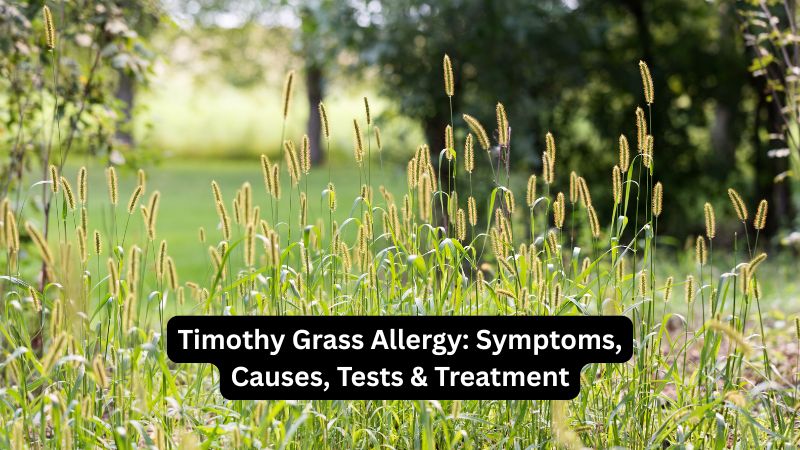
Timothy grass is one of the most common types of grass found nearly everywhere in the world, due to which Timothy Grass Allergy is also one of the prevalent allergens. Because it’s so common and widespread, this allergy is hard to avoid, but once it affects someone, it can be treated. Timothy grass pollen is a real problem and is generally more widespread in summer than in other seasons.
Timothy grass is from Asia, Europe, and North Africa but is now found everywhere. It mainly occurs in cool places and is more prevalent in humid areas. It is found nearly everywhere in America.
Timothy Grass Allergy at a Glance
Timothy grass allergy is an immune reaction to pollen from Phleum pratense, a cool-season grass. It causes hay fever symptoms like sneezing, a runny or blocked nose, and itchy, watery eyes. Timothy is the grass most allergists use as the standard for testing and treating grass pollen allergy. Symptoms are worst when grass pollen is in the air, mainly in late spring and summer. It is diagnosed with a skin prick test or a blood test, and it can be treated with allergy medicines or long-term immunotherapy.
| Question | Short answer |
|---|---|
| What causes it? | Breathing in pollen from Timothy grass (Phleum pratense). |
| When is it worst? | Grass pollen season, mainly late spring and summer. It can last from spring into autumn. |
| Main symptoms | Sneezing, runny or stuffy nose, itchy and watery eyes, sometimes cough or wheeze. |
| How is it confirmed? | Skin prick test or a specific IgE blood test done by a doctor. |
| Can it be treated? | Yes, it can be treated with antihistamines, steroid nasal sprays, eye drops, and allergy immunotherapy. |
| Can it be cured? | There is no instant cure, but immunotherapy can reduce symptoms for years. |
Causes and Symptoms of Timothy Grass Allergy
This nasal allergy causes tightness or chest pain, sneezing, runny nose, blocked nose, cold, and tearing. The primary allergy-causing agent is airborne pollen from Timothy flowers. The protein in this pollen changes with the seasons; therefore, one might get this allergy any time of year. Pollens are so tiny that it is difficult to locate them, and they can be breathed in easily without you knowing it. The contraction of this allergy primarily depends on the immune system; a person with a compassionate immune system could quickly get this allergy. It is essential to check oneself thoroughly for the type of protein responsible for the allergy. Timothy grass allergies lead to asthma and hay fever, the two most common nasal allergies.
How Is Timothy Grass Allergy Diagnosed?
You cannot confirm a Timothy grass allergy by symptoms alone. Many pollens are in the air at the same time, so a doctor uses a test to find the real trigger. There are two common tests.
Skin Prick Test
A drop of Timothy grass extract is placed on your skin, usually the forearm or back. The doctor lightly pricks the skin under the drop. If you are allergic, a small itchy bump appears in about 15 to 20 minutes. It is quick and done in the clinic.
Specific IgE Blood Test
A blood sample is checked for IgE antibodies to Timothy grass pollen. This is useful if you have a skin condition, take medicines that affect skin testing, or cannot stop antihistamines before a skin test.
Component Testing (Phl p 1 and Phl p 5)
Timothy pollen has several allergy proteins. Two of them, called Phl p 1 and Phl p 5, are found in most people with true grass pollen allergy. Testing for these helps the allergist tell a real grass allergy apart from a cross-reaction, and helps decide if immunotherapy is likely to work.
Season and Location for Timothy Grass Allergy
Asia, Europe, and North Africa are the places where this grass originates, but it is now found everywhere in the United States, primarily in humid and cool areas. The flowers of Timothy grass grow during the summer season. The flower of the grass pollinates during the end of summer or the fall. The wind transports the pollens out of the flowers, which continue to be there till late fall when the allergy symptoms might peak. Hot and windy days are more dangerous for this allergy than cold days.
Timothy Grass Pollen Season: When Symptoms Peak
Timothy grass flowers in late spring and early summer. It releases the most pollen through summer. Grass pollen can be in the air from spring into autumn, but summer is the peak for most temperate regions. Warm, dry, and windy days push pollen counts higher. Rain washes pollen out of the air and gives short-term relief.
Grass pollen sits in a different part of the year than tree and weed pollen. Knowing the order helps you plan ahead.
| Pollen type | Usual peak | Examples |
|---|---|---|
| Tree pollen | Early to mid spring | Birch, oak, cedar |
| Grass pollen | Late spring and summer | Timothy, rye, orchard, Kentucky bluegrass |
| Weed pollen | Late summer to autumn | Ragweed, mugwort |
Exact timing shifts with your location and the weather each year. In warm climates, grasses can release pollen for many months. Growing seasons have also been getting longer, which can stretch grass pollen season.
How to be Alert from Timothy Grass Allergy
This allergy is very active in the late fall but might vary from place to place. If you are going out for some outdoor activity, then it is wise to inquire in advance about the local pollen counts. Pollen count reports could be obtained from weather websites.
Prevention and Treatment of Timothy Grass Allergy
Due to the presence of the Timothy grass pollen in the air, it is challenging to avoid this altogether. Antihistamines are very effective in this condition and can be taken every day. However, if the problem is severe, it is always wise to see a doctor for further treatment and to know the advanced preventive measures.
Ways to Prevent and Manage Timothy Grass Allergies
- Avoid: Do not go out during Timothy grass’s high-pollen seasons, primarily on breezy days.
- HEPA Filters: Install HEPA filters in your car and living spaces to capture pollen.
- Pollen Monitoring: Track local pollen counts in the news and take preventive measures when they are higher.
- Change Clothes and Take a Shower: After spending time outdoors, change your clothing and take a shower to remove pollen particles.
- Home Precautions: You can close windows and use air purifiers to minimize indoor pollen.
Treatment Options for Timothy Grass Allergy
- OTC Antihistamines: Non-prescription antihistamines like Zyrtec, Allegra, or Claritin ease symptoms like itching and a runny nose.
- Steroid Nasal Sprays: Products such as Flonase might alleviate nasal symptoms.
- Allergy Shots: A long-term treatment plan involving gradual exposure to small doses of the allergen builds resistance over time.
- Relief for Eyes: Antihistamine eye drops relieves symptoms like itchy, watery eyes.
- See a Specialist: For chronic or severe allergies, a consultation with an allergist for specialized treatment may be necessary.
Long-Term Treatment: Allergy Shots and Under-the-Tongue Tablets
Medicines ease symptoms, but they do not change the allergy. Allergy immunotherapy is different from medication. It slowly trains your immune system to react less to grass pollen. Over time, many people need less medicines. There are two main forms.
Allergy Shots (Subcutaneous Immunotherapy)
A doctor gives small injections of grass allergen, first often, then less often. A big benefit is that the mix can cover several of your triggers at once, not just grass.
Under-the-Tongue Tablets (Sublingual Immunotherapy)
You place a tablet under your tongue each day and let it dissolve. The first dose is given in a clinic in case of a reaction, then you continue at home. A Timothy grass tablet sold as Grastek is approved by the U.S. FDA for people aged 5 to 65 with grass pollen allergy confirmed by testing. Points to know:
- It is for prevention, not instant relief. Start it about 12 weeks before grass pollen season.
- It may be taken daily, and for lasting benefit it can be continued for about three years.
- The label carries a boxed warning about severe allergic reactions, so it must be prescribed and started under medical care.
- Common side effects are mild mouth or throat itching, and mouth swelling.
Immunotherapy is not right for everyone. People with severe or uncontrolled asthma and some other conditions may not be able to use it. An allergist can tell you if you are a good fit.
Timothy Grass and Other Grasses: Cross-Reactivity
If you react to Timothy grass, you often react to other cool-season grasses too. Their pollen proteins look similar to your immune system. This is called cross-reactivity.
- Often cross-react: ryegrass, orchard grass, Kentucky bluegrass, meadow fescue, and other northern grasses.
- In most cases, it does not cross-react: Bermuda grass, a warm-season southern grass. It has different proteins, so a separate test may be needed if you live where it grows.
This matters for treatment. Because Timothy stands in for many northern grasses, a single Timothy-based immunotherapy can help with several grass allergies at once. It will not cover Bermuda grass.
Timothy Grass Allergy and Food (Oral Allergy Syndrome)
Some people with grass pollen allergy get an itchy or tingly mouth after eating certain raw fruits and vegetables. This is called oral allergy syndrome, also known as pollen food allergy syndrome. It happens because some food proteins look like grass pollen proteins to your immune system.
Foods That Can Trigger It
Foods linked with grass pollen include:
- Melons and watermelon
- Oranges
- Tomatoes
- Peaches
- Celery
- Figs and white potato (less common)
What It Feels Like
Symptoms are mild and stay in the mouth, lips, or throat. Common signs are itching, tingling, or mild swelling. They often start within minutes and fade fast once you stop eating the food. Cooking the food usually breaks down the protein, so cooked versions are often fine.
Oral allergy syndrome is not the same as a severe food allergy. But if you ever get throat tightness, trouble breathing, or swelling that spreads, treat it as an emergency and get medical help right away.
Can Timothy Grass Allergy Cause Asthma and Other Problems?
Grass pollen allergy is more than a runny nose for some people. When it is not controlled, it can lead to other issues.
- Asthma flares: Grass pollen can trigger or worsen asthma, with coughing, wheezing, chest tightness, or shortness of breath. A large share of people with grass pollen hay fever also have twitchy airways.
- Allergic conjunctivitis: Red, itchy, watery eyes that affect reading, screens, and sleep.
- Sinus and ear issues: A blocked nose that stays for weeks leads to sinus pressure or infections.
- Poor sleep and low focus: Nighttime congestion breaks sleep, affecting work, study, and mood.
If you feel chest tightness or wheeze during grass season, tell your doctor. It may be more than hay fever.
Timothy Grass Allergy in Children
Grass pollen allergy often starts in childhood or the teen years. Signs in kids include a stuffy or runny nose, sneezing, rubbing itchy eyes, mouth breathing, and poor sleep during grass season. It can also set off asthma symptoms.
The Timothy grass tablet is approved for children as young as 5, which gives an option for families who prefer to avoid injections. Any treatment plan for a child should be set by a doctor only.
When to See a Doctor
Mild hay fever can often be managed at home. See a doctor or allergist if:
- Over-the-counter medicines do not control your symptoms.
- Symptoms last many weeks or come back every year.
- You have wheezing, chest tightness, or shortness of breath.
- Symptoms disturb sleep, work, or school.
- Testing to confirm the trigger or to start immunotherapy.
Get emergency care for any sign of a severe reaction, such as trouble breathing, throat swelling, or fainting.
Frequently Asked Questions
Is Timothy grass allergy common?
Yes. Timothy is one of the most common grass allergies in the United States and Europe. It is so common that allergists use it as the reference grass for testing.
What months is Timothy grass pollen highest?
Mostly late spring and summer in temperate regions. Grass pollen can appear from spring into autumn, and warm windy days raise the counts.
Can Timothy grass allergy cause asthma?
It can trigger or worsen asthma in people who are prone to it. Watch for cough, wheeze, or chest tightness during grass season and speak to a doctor.
What foods should I avoid with a Timothy grass allergy?
Only avoid foods that give you an itchy mouth. Common triggers are melon, orange, tomato, peach, and celery. Cooking these foods usually removes the reaction.
How do I get tested for Timothy grass allergy?
A doctor can do a skin prick test or a specific IgE blood test. Both look for an allergic response to Timothy grass pollen.
Does Timothy grass allergy go away on its own?
It may ease over years for some people, but often it stays. Immunotherapy is the main way to lower the allergy long term.
Is Timothy grass allergy the same as a hay allergy?
Timothy hay is dried Timothy grass, often fed to horses and pets. Handling it can stir up pollen and dust and set off the same symptoms in sensitive people.
Can I still exercise outdoors during grass season?
Yes, but with care. Check the daily pollen count, pick lower-count times, and shower and change clothes when you come back inside your room.
How long does immunotherapy take to work?
Many people notice improvement within the first season. However, the best results comes after continued use. People take tablets and shots for about three years. Your allergist will guide the plan.
Can children take Timothy grass immunotherapy?
Yes. The Timothy grass tablet is FDA approved from age 5. A doctor decides if it is suitable for your child.
