

Known as ‘Amrit’ or ‘the Divine nectar of immortality,’ Guduchi (also called Giloy and Gurcha in Hindi) is one of the few herbs highly regarded in Ayurveda for its medicinal properties. Guduchi, or Tinospora cordifolia, grows as a vine-creeper on neem and mango trees, with the ones grown on neem trees being more beneficial medically. Researchers worldwide are studying the herb’s amazing medicinal benefits and often call it a wonder herb. Learn more about this wonderful herb and its health benefits.
Is Guduchi and Giloy the Same? Names and Meaning
Yes, Guduchi and Giloy are the same plant. Guduchi is the Sanskrit name, and Giloy is the common Hindi name. Its botanical name is Tinospora cordifolia, and in English it is called heart-leaved moonseed. You may also see it called Gurcha, Amrita, or Amrit.
The names Guduchi and Amrita point to the same idea: a herb that protects the body and supports long life. That is why old texts call it the nectar of immortality.
Health Benefits of Guduchi (Giloy)
Guduchi offers a variety of health benefits, and its plant is used for medicinal purposes.
- Boosts memory: It helps with the proper functioning of the nervous system and boosts memory and brain health.
- Helps in recovering from hepatitis: A patient with hepatitis can be given fresh Guduchi juice mixed with candy.
- Improves liver and kidney health: It boosts liver health by eliminating toxins that have build up. Whether it is jaundice or hepatitis, Guduchi can be a highly effective help in its treatment. For jaundice, a curry made from the stem and leaves is highly beneficial and helps with treatment.
- Treats digestive disorders: Whether it is acidity, worm infestation, abdominal pains, loss of appetite or vomiting, Guduchi can be an effective remedy for these digestive ailments.
- Helps in conception: It acts as an aphrodisiac, boosting sexual potency and sperm to help couples reproduce.
- Skin Disorders: The herb is very beneficial in the treatment of some chronic skin disorders like psoriasis and eczema. It also enhances the complexion, making the skin healthy and glowing. Just apply a paste with Guduchi and see a marked difference. Patients of vitiligo have also been found to reap its benefits. It is also beneficial in the early stages of leprosy. The juice out of its stem is beneficial in this condition.
- Effective anti-diabetic agent: Guduchi has been seen to exhibit some properties that help controlling blood sugar levels. It acts on the enzymes responsible for raising sugar levels in the body.
- Acts as an adaptogen: The herb has been found to have adaptogenic properties and increases the body’s resistance to stress, illnesses, depression, and anxiety.
- Increases immunity: This herb activates the immune system of the body, boosting immunity and promoting vitality in a person.
- Helpful in treating gout and rheumatic disorders: A decoction prepared with Guduchi and sunthi helps in strengthening tissues and helps in comfortable movement in the joints. Elevated uric acid levels can also benefit from the use of Guduchi.
- Believed to treat cancer: Guduchi vine that grows on neem trees is believed to treat cancer and other blood-related disorders. When administered on test mice, it showed improvement in the beutrophil functions. Further studies is being conducted on this in Mumbai’s cancer research institute.
- Detoxifies the body: Given its ability to rid the body of toxins, Guduchi is an excellent way to boost overall health and wellness due to the detoxification effect.
- Acts as a febrifuge: The starchy part of Guduchi is used to treat fever and related ailments.
Side effects of Guduchi
- The herb has a hypoglycemic effect. People with low blood sugar may experience a sudden drop if combined with medicines. Always seek your doctor’s advice if using it to reduce sugar levels.
- People who are suffering from systemic lupus erythematosus, multiple sclerosis, or rheumatoid arthritis should take this herb with caution. People with these autoimmune diseases may want to avoid it.
- If you are pregnant, avoid the herb because there is limited research on its benefits during the gestation period. Use it only as a supplement after discussing it with your doctor.
- There are no known drug interactions or contraindications reported against Guduchi.
What is Guduchi? (Giloy)
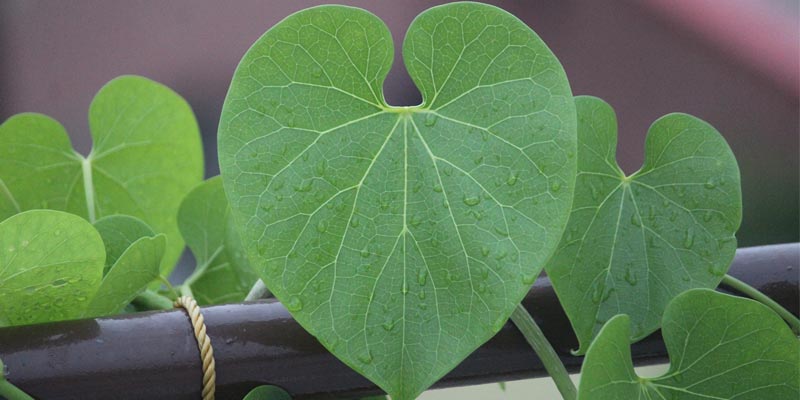
Tinospora cordifolia is a vine of the family Menispermaceae, native to the Indian subcontinent countries of India, Myanmar, and Sri Lanka. It grows as a shrub with several branches that extend to climb the tree it grows on. It bears simple, heart-shaped leaves with axillary flowers. The flowers are yellow, and the vine bears a drupe fruit that turns red at maturity. It has a succulent stem and papery bark. It is mostly found growing on neem and mango trees. Vines that grow on neem trees are believed to be more potent medicinally because they absorb neem’s blood-purifyingg propertiem. Guduchi is essentially immunomodulatory, meaning it modifies the immune response based on the disease it is fighting.
Ayurveda and Guduchi(Giloy)
The ancient Ayurvedic medicine has acclaimed Guduchi as a ‘Divine nectar’. Ayurveda believes it to possess healing properties and to fight the excess of the 3 doshas – Vata, Pitta, and Kapha. Because of its healing properties, it is believed to clear the body of accumulated toxins, purifying the liver, kidneys, joints, and blood. Because it acts as a purifying agent and rids the body of harmful toxins, one notices a marked change in skin health too- it glows, shines, and looks much healthier. It also rejuvenates body tissues and enhances reproductive health. Ayurveda believes Guduchi to have calming effects on the mind. Ayurveda considers Guduchi ‘Amrit’ because it is believed to promote vitality and longevity. Let us now sum up Guduchi’s health benefits.
Medicinal Benefits of Guduchi
Giloy is often used in ayurvedic preparations for its following benefits –
- Expectorant
- Anti-inflammatory
- Anodyne
- Thermogenic
- Anti-emetic
- Carminative
- Haematinic
- Alterant antispasmodic
- Astringent
- Antipyretic
- Galacto Purifier
Forms of Guduchi and How to Take It
Guduchi comes in many forms. The stem is the most used part, since it holds most of the active compounds. Pick the form that suits you, and start with a small dose.
| Form | How to Take It | Often Used For |
|---|---|---|
| Fresh juice | 2 to 3 teaspoons with water, on an empty stomach | Immunity, fever, blood sugar |
| Powder (churna) | Half to one teaspoon with warm water or honey | Digestion, skin, general health |
| Satva (starch) | A small pinch with water | Acidity, burning, weakness |
| Tablet or vati | As written on the pack or by your doctor | Daily use |
| Kadha (decoction) | Boil the stem in water, strain, and sip warm | Colds, cough, fever |
Most people take Guduchi in the morning on an empty stomach. It is best used for a set number of weeks, not forever, and with a doctor’s advice if you take other medicines.
FAQs about Health Benefits of Guduchi
1. Can Guduchi be used to support mental clarity?
Yes, Guduchi helps support mental clarity. It is known for its adaptogenic properties. It reduces stress, which leads to better focus and mental sharpness. Some users report improved concentration and memory with regular use. Many see it as a natural way to stay sharp without relying on caffeine.
2. Is Guduchi safe for children?
Guduchi benefits children, especially for immune support. However, the dose matters. Ayurvedic practitioners recommend it for kids. Always consult a healthcare provider first before you start any such things. Children require lower doses. A professional guides safe use and the appropriate dosage.
3. Can Guduchi help with seasonal allergies?
Guduchi’s immune-modulating effects may help relieve seasonal allergies. It helps regulate immune responses and reduces symptoms like sneezing and runny nose. Many people use it seasonally to manage mild allergy symptoms, primarily in rural areas.
4. Does Guduchi affect energy levels?
Yes, Guduchi boosts energy by reducing stress and fatigue. It helps the body stay resilient by helping for liver health and immune function. Users feel more energized and balanced, especially when taken regularly as part of a healthy lifestyle.
5. What is the best time to take Guduchi?
Most people take Guduchi in the morning on an empty stomach. This way body absorbs it well. Some take it again at night for better sleep and calm. Keep the dose small and steady, and do not take it right after a heavy meal.
6. Does Guduchi affect the liver, and are there side effects?
Guduchi supports the liver, but it is not risk-free. There have been reports of liver injury linked to Giloy, mostly in people with existing liver disease or those using unbranded or mixed products. Stop and see a doctor if you notice yellow eyes, dark urine, or belly pain. Buy from a trusted brand and use it in short courses. (Source)
7. Can you take Guduchi with diabetes medicine like metformin?
Be careful here. Guduchi can lower blood sugar on its own. Taken with diabetes medicine, it may push sugar too low. If you take metformin or any sugar medicine, talk to your doctor first and watch your levels closely.

2 Comments
Loved this article and wonder where this herb can be purchased. Any answers on this?
You can purchase it at Amazon.