

Grape leaves eventually bind up free radicals and help slow aging. Grape leaf tea is very low in calories because it contains no fat and almost zero digestible carbohydrates or sugar.
Grape leaves are typically edible as well. You can dry the leaves to make a lovely tea that will remind you of an earthy green refreshment session. Anyway, it is a great way to use vine cuttings that would otherwise need to be thrown away.
6 Benefits of Grape Leaves Tea
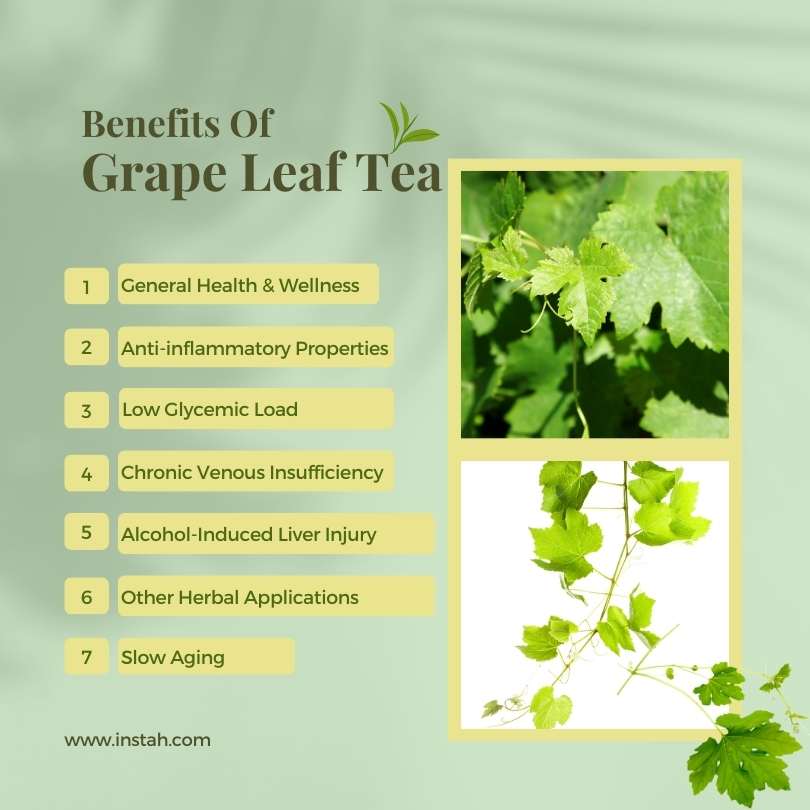
Grape leaves are rich in vitamins and minerals. They are a popular staple of heart-healthy Mediterranean cuisine. In this region, grape leaves are often found canned or bottled. Fresh or raw grape leaves are best consumed after blanching or steaming. The U.S. Department of Health and Human Services includes grape leaves in its recommended grocery list under its nutrition guidelines for Americans. [1]
1. General Health & Wellness
Grape leaf tea is ideal for people watching their weight. Every five grape leaves contain just about 14 calories. Grape leaves are also a good source of nutrients. These include vitamins A, C, E, K, and B6, calcium, copper, fiber, folate, iron, magnesium, manganese, niacin, and riboflavin. One cup of grape leaves contains a single heart-healthy serving. It has no cholesterol or fat and is extremely low in sodium and sugar. [2]
2. Anti-inflammatory Properties
Grape-leaf tea is mildly anti-inflammatory. This rating is based on estimates of the inflammatory potential of foods and food combinations. Chronic inflammation usually causes certain diseases and illnesses. These include Alzheimer’s, many types of cancers, and heart disease. Other inflammation-related illnesses include arthritis and gastrointestinal conditions like Crohn’s disease. Individuals’ genetics and lifestyle can also contribute to chronic inflammation. Therefore, maintaining a healthy, low-inflammatory diet is the best strategy. It helps reduce the risk of disease. [2]
3. Low Glycemic Load
A single serving of grape-leaf tea is full of nutrients. It has a low glycemic load of just 1 per serving. Monitoring your glycemic load is important. It is more so if you are a diabetic patient. Glycemic load measures how much a food affects blood sugar levels. Healthy adults’ total glycemic load target is 100 or less per day. And grape leaves are a healthy choice. Inadvertently, people with diabetes or metabolic syndrome should aim for a lower count. [3]
4. Chronic Venous Insufficiency
The Department of Dermatology at the University of Freiburg conducted a study in 2010. Researchers used plant extracts from grapevine leaves to reduce edema in patients with chronic venous insufficiency. This condition is characterized by veins that have problems returning blood from the legs to the heart. This usually happens when blood cannot return to the heart. As a result, the legs may swell, causing edema. Reduction of edema will make the patient more comfortable. It also reduces swelling and lessens strain on the vascular system.
5. Other Herbal Applications
Grape leaves have been used for centuries to treat various health conditions. Particularly, the red grape leaf variety is still used in herbal applications. Other uses for grape leaves include treating ailments like canker sores, diarrhea, heavy menstrual bleeding, and uterine hemorrhage. Native Americans commonly used wilted grape-leaf tea to treat diarrhea, hepatitis, stomach aches, pains, and thrush. Grape leaf tea is also an ideal cure for fevers, headaches, rheumatism, and sore breasts. [4]
6. Grape-Leaf Extract Benefits for Alcohol-Induced Liver Injury
GLE is rich in phenolic compounds and has antioxidant properties. It protects the liver from oxidative damage. The study at Mansoura University, Egypt, demonstrated hepatoprotective effects against alcohol damage. It does so by suppressing liver inflammation and reducing NF-κB expression. It also reduces apoptosis in liver tissue. In the process, it also improves markers of liver injury and corrects liver tissue abnormalities. It does so because polyphenols bind to proteins. [5]
Are Grape Leaves Good for You? Benefits of Eating Grape Leaves
Grape leaves are good for you whether you brew them as tea or eat them. The leaves themselves are a nutrient-dense green, rich in fiber, vitamin K, manganese, calcium, and antioxidants, with very few calories.
The main benefits of grape leaves include:
- They are high in antioxidants that fight cell damage and support healthy aging.
- They are mildly anti-inflammatory, which may ease joint and gut trouble.
- They are rich in fiber, which supports digestion and steady blood sugar.
- They have a long history in herbal medicine for problems like diarrhea, sore throats, and poor leg circulation.
Grape leaves are best known as dolma, stuffed grape-leaf rolls in Greek, Turkish, and Middle Eastern cooking. Blanch or steam fresh leaves first to soften them and cut the bitterness. This makes them a tasty, low-calorie way to get the same goodness the tea offers.
Grape Leaf Tea: Key Information
| Category | Description |
|---|---|
| Origin | Mediterranean region |
| Preparation | Steep dried leaves in hot water for 5-10 min |
| Flavor | Earthy, bitter, fresh |
| Best Served With | Honey, lemon, mint |
| Culinary Use | Used in dolma, salads |
| Storage | Airtight container, up to 1 year |
| Availability | Available in specialty herb shops |
| Side Effects | Safe, consult if pregnant or have other medical conditions |
| Popular In | Greece, Turkey, Middle East |
Grape Leaf Nutritional Value (Per 100g)
| Nutrient | Amount | % Daily Value |
|---|---|---|
| Calcium | 363 mg | 28% |
| Magnesium | 95 mg | 23% |
| Iron | 2.6 mg | 15% |
| Manganese | 2.9 mg | 124% |
| Vitamin A | 77 µg | 9% |
| Vitamin C | 11 mg | 12% |
| Vitamin K | 110 µg | 92% |
| Fiber | 11 g | 44% |
Note: Values are approximate and might vary based on the way it is prepared and how it is sourced.
How to Prepare Grape Leaf Tea
- Harvest young, fresh grape leaves (In spring or early summer).
- Wash them thoroughly to remove dirt and chemicals.
- Boil 1-2 cups of water and pour it over 4-5 grape leaves.
- Let it steep for 10–15 minutes.
- Strain and serve warm.
Optional: Add a slice of lemon or a teaspoon of honey for better taste and extra benefits.
Considering the Goodness of Grape Leaf
Calcium content in tea is also essential for strong bones and normal muscle tone. Vitamin A in grape leaf tea is a potent antioxidant that supports good vision. Grape-leaf tea has been consumed for ages because of the benefits it offers.
A small bunch of grape leaves has less than 30 calories. This is probably less energy than chewing, swallowing, and digesting them. So, making tea from grape leaves is also a good choice for weight loss.
Comparison with Other Herbal Teas
| Tea Type | Main Health Benefits | Caffeine Content |
|---|---|---|
| Grape Leaf Tea | Anti-inflammatory, rich in antioxidants | Caffeine-free |
| Green Tea | Boosts metabolism, contains catechins | Moderate |
| Chamomile Tea | Promotes sleep, soothes digestion | Caffeine-free |
Side Effects and Precautions
- Digestive Issues: Too much of the tea might cause stomach discomfort or diarrhea.
- Medication Interactions: Grape leaves may interact with blood-thinning medications.
Always consult with a healthcare provider before starting any herbal treatment, especially if you are on medication or pregnant.
Grape Leaf Tea FAQs
Are grape leaves good for you?
Yes. Grape leaves are low in calories and rich in fiber, vitamin K, manganese, and antioxidants. Both the tea and the cooked leaves give you these nutrients, along with mild anti-inflammatory benefits.
Can you eat grape leaves?
Yes, grape leaves are edible. Fresh ones are best blanched or steamed first to soften them. They are the main part of dolma, the stuffed grape leaf dish, and can also go into salads.
Is grape leaf tea caffeine-free?
Yes. Grape leaf tea is naturally caffeine-free, so it suits people cutting down on coffee or drinking it in the evening. It has an earthy, slightly bitter taste that honey or lemon can soften.
How much grape leaf tea can you drink in a day?
One to two cups a day is enough for most people. Too much can upset the stomach. If you take blood-thinning medicine or are pregnant, check with your doctor first, since grape leaves are high in vitamin K.
Are grape leaf tea and muscadine leaf tea the same?
They are close. Muscadine is a type of grape, so its leaves are used similarly and offer similar benefits. You can dry any grapevine leaf for tea, though the taste varies a little by variety.
Does grape leaf tea have any side effects?
For most people, it is safe in normal amounts. Too much may cause stomach upset or loose stools. It is high in vitamin K, which can affect blood thinners, so speak to your doctor if you take one.
What are the medicinal uses of grape leaves?
Traditionally, grape leaves have been used for diarrhea, sore throats, heavy periods, and swollen, tired legs from poor circulation. Modern studies point to their antioxidant and anti-inflammatory effects, though more research is needed.
References
- Office of Disease Prevention and Health Promotion – https://health.gov
- Grapevine Pathogen Systems Lab. (GPS Lab.), Biosystems and Integrative Sciences Institute (BioISI), Faculdade de Ciências, Universidade de Lisboa, Campo Grande, 1749-016 Lisboa, Portugal – https://www.ncbi.nlm.nih.gov/pmc/articles/PMC8534917/
- Janice Wen Xin Lim, Cheryl Gammon, Pamela Ruth Von Hurst(Massey University, Auckland), Lynne Chepulis, The University of Waikato – https://www.researchgate.net/
- CQ-VR, Department of Biology and Environment, School of Life Sciences and Environment, Enology Building, Chemistry Research Center, University of Trás-os-Montes and Alto Douro (UTAD), 5000-801 Vila Real, Portugal – https://www.mdpi.com/2306-5710/5/3/48
- Department of Pharmacognosy, Faculty of Pharmacy, Mansoura University, Mansoura 35516, Egypt – https://www.ncbi.nlm.nih.gov/pmc/articles/PMC7225955/
