

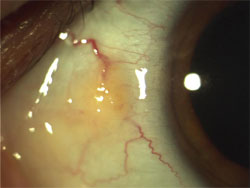
 Pingueculitis is the medical condition where the Pinguecula remains inflamed. Pingueculitis is a health condition in which the Pingueculae gets inflamed and is vascularized as it causes redness and irritation in the eyes. Pingueculae are structures that are slightly raised and yellow. These deposits look like interpalpebral deposits. Such systems are found in one’s nasal and temporal limbal conjunctiva. Predilection towards any race or sex is not there.
The Pinguecula refers to the non-cancerous and benign growth developed on the sclera or the white part of the eye. These swelled-up bumps result from fat, calcium, and protein deposits and will irritate, leading to Pingueculitis.
Pingueculitis is a condition that can affect people of all ages. However, it mainly affects the elderly and middle-aged people in areas prone to extreme sun rays. It will also affect young children who spend a lot of time outdoors without any gear for protection.
Even though this eye condition will not affect an individual’s vision, it can lead to pterygium if left untreated. Pterygium is a fleshy tissue growth in a triangle shape that appears on the sclera and later proceeds to the cornea. Knowing the causes, symptoms, and treatment of Pingueculitis will help you stay informed and treat it if you have a slight growth in the outer or inner sclera.
What are causes Of Pingueculitis
The exact causes of Pingueculitis are not known. However, certain risk factors can be considered responsible for the growth of the tissue in the eye. The following factors mentioned below are the contributing factors of Pingueculitis.
- Exposure to Extreme Sunlight: Working in regions that have extreme heat of the sun can be a major contributing factor to Pingueculitis. The conjunctiva tissues do not have any strong layer of keratin like the skin. So, the eye tissues are prone to extreme damage when exposed to excess sunlight.
- Hyperthyroidism and Eye Health: People who are suffering from hyperthyroid issues face a high risk of being affected by Pingueculitis. Patients with hyperthyroidism are susceptible to Thyroid Orbitopathy, as their hyperactive thyroid gland would hinder their eye health. If the thyroid functions are not corrected with medications, then it can worsen the condition of Pingueculitis.
- Residence in Extreme Climates: People who are residing in regions with extreme climates would be exposed to several environmental elements like wind, dust, or sunlight. When they fail to wear protective wear against such environmental factors, they risk developing Pingueculitis.
- Radiation Exposure: Prolonged hours of exposure to Infrared and Ultraviolet radiation.
- Occupational Risks: Occupational risks faced by fishermen, farmers, and mechanics working with welding machines.
- Extended Outdoor Activities: Outdoor activities, such as gardening and golf, require people to spend a significant amount of time.
- Residing in Dry Environments: Stay in arid environments like the desert or an air-conditioned room.
- Exposure to Chemicals: Constant exposure to chemicals.
What are symptoms of Pingueculitis
If you are experiencing one or more of the symptoms of Pingueculitis, then make sure that you seek the advice of an eye specialist for diagnosis.
- A small yellow patch can appear on the sclera part of the eye
- Patches could be located in the area of the nose
- There is swelling in the areas where there is infection
- Redness is there in the eye.
- Formation of yellowish growth on the conjunctiva
- Severe irritation
- Extreme dryness in the eye
- Difficulty while putting on the lens
- Swelling in the infected areas in the sclera
- Burning sensation
- Reddishness in the conjunctiva
- Stinging sensation
- Itchy feel
- Blurred vision
- Inflamed conjunctiva
- Chronic feeling of a foreign body in the eye
- Occasional discomfort in the affected area
If the person affected with Pingueculitis notices changes in the color, shape, or size of the growth in the eye, then he must report it to the eye doctor immediately.
What kind of treatment has been prescribed?
The treatment for Pingueculitis mainly depends on two factors, i.e., symptoms and the severity of the condition. The eye specialist would confirm this condition by examining the eye with a slit lamp, a light source attached to the microscope.
The eye care professional would suggest treatment for any alteration or interference with the vision. Sometimes, the treatment would be initiated when the patients with Pingueculitis face difficulties performing everyday activities or affect their quality of life.
- For Mild Condition: The doctor would prescribe artificial teardrops that are free from preservatives to alleviate dryness in the eyes. It would also provide good relief from the sensation of having a foreign body in the eye. These drops will help in relieving the symptoms related to mild Pingueculitis.
- For Severe Condition: When one has severe Pingueculitis, they might experience inflammation, pain, and swelling in the eye. The physician will prescribe nonsteroidal anti-inflammatory drugs or NSAIDs to reduce inflammation. The physician would prescribe eye ointment to relieve itchy feel or irritation. Medications would be given to treat the severity and prevent it from recurring.
- Surgery: The Pinguecula needs to be removed surgically when it grows over the cornea, disrupting the vision. The eye specialist would only discuss the surgical options available when the Pinguecula is unresponsive to the treatment. Surgery will be advised only when the patient experiences severe eye discomfort, even after applying ointment and eye drops.
How To Prevent Pingueculitis?
One can follow the preventive steps mentioned below to lower the risk of developing this condition.
- UVB and UVA Resistant Sunglasses: While spending a lot of time outdoors, it is advisable to wear sunglasses that have UVB and UVA resistant coating to prevent the rays from damaging the eye tissues.
- Opt for Wraparound Frames: Shop for sunglasses with a wraparound frame to block the sun rays to protect the eyes.
- Limited Sun Exposure: Control the duration spent outdoors in the hot sun.
- Moisturize the Eyes: Apply artificial tears to moisturize the eyes and prevent dryness and Pinguecula.
- Wear Protective Gear: Wear protective gear when working in areas with extreme temperatures.
- Intake of Vitamin A: Take Vitamin A in the form of food items like apricots, carrots, corn, and mangoes as well as Vitamin A supplement to maintain healthy eyes.
- Consume Antioxidant-Rich Foods: Include fruits and vegetables rich in antioxidants, Vitamin E, and Vitamin C, like garlic, sweet potatoes, and citrus fruits to prevent degeneration of eye cells.
- Eat Omega-rich Foods: Eating foods rich in Omega-6 and Omega-3 fatty acids will reduce dryness in the eyes. These fatty acids are crucial for prostaglandin production to hydrate the eye tissues.
The eyes are a sensitive part of our body. Any infection can cause much damage to them. We need our eyes to see things around us. They are a significant organ of our body system. We suffer from various infections and other kinds of health problems related to the eyes.
We have compiled complete information about the causes, symptoms, and treatment of Pingueculitis to help you better understand when you develop a bump with irritation in your eye’s sclera. You can also follow our steps of prevention to maintain your eye health.
