
Smoking while one is pregnant is bad for health. Many women are aware of this, yet continue to smoke. The fetus in the womb gets damaged if one smokes while one is pregnant. Similarly, while breastfeeding, one must avoid smoking. Smoking is considered bad for health as it can lead to severe diseases such as cardiovascular problems, lung cancer, oral cancer, etc.
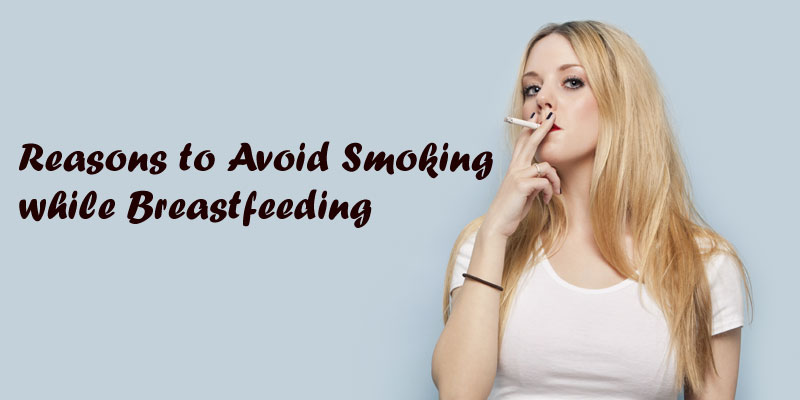
Breast milk is the best type of food for the baby in the early period of the baby’s growth. It contains a lot of nutrients. Many working women hesitate to breastfeed their child as they have no time. But since pregnancy leave is available for them, they need not deny their child good nourishment. Breastfeeding women who smoke have problems such as the lesser production of milk, low production of prolactin levels, early weaning of the baby, etc. If you are a breastfeeding mother and planning to quit smoking, then it is the right time now to make this decision.
The welfare of the newborn must be kept in mind, and one must ensure that one cuts down on smoking while breastfeeding. It may be difficult, but one must have the child’s welfare in mind.
Should a mother who smokes stop breastfeeding the baby?
Many experts opine that it is best for a mother to continue breastfeeding even if she smokes. Breastfeeding provides several health benefits for the baby, such as stronger immunity, proper nutrition, and protection against health conditions. Hence, it is better to smoke and breastfeed rather than putting the baby on formula feed.
Why is Smoking bad While Breastfeeding?
- It is advisable not to keep the newborn in an environment where there is a lot of smoke around. As it is, passive smokers are also at risk of developing lung cancer, cardiovascular problems and other smoking-related diseases to which even the newborn can be exposed. The newborn gets exposed to secondhand smoke.
- The chemicals present in tobacco can enter through the breast milk. The most common nicotine-containing chemical is nicotine, which changes into cotinine and is passed on to the child through breast milk.
- Breast milk also tastes like cigarettes if one smokes, as there is nicotine present in the bloodstream after one smokes. One must smoke after one has breastfed the baby to lessen the effect of nicotine passed through breast milk.
- The baby can also be very fussy on account of smoking.
- The smoke can also irritate the child and make him or her feel nauseated.
- Babies living in a house where there are smokers are more likely to develop colic as compared to those who are non- smokers.
- It is necessary to have an adequate milk supply as one can feed the baby for a longer period of time. Smoking can affect the required amount of flow of milk, and babies are weaned early.
- The smoke can suffocate the newborn. It can affect breathing because the baby inhales the smoke.
- The baby can be at the same risk as a passive smoker as far as contracting diseases is concerned on account of inhaling smoke.
- Smoking lowers the amount of Vitamin C in the breast milk
- Women who smoke wean their babies earlier than women who do not smoke
- Smoking lowers the prolactin hormone in the breastfeeding mother, which is responsible for relaxing the mother
- Nicotine, which is released in the milk due to smoking, alters the taste of the milk. This lack of taste may make the infant refuse breastmilk
- Babies of mothers who smoke more than 15 cigarettes can have health effects such as restlessness, loose stools, increased heart rate, increased risk of colic, etc.
It is very important for the mother to keep the baby away from secondhand smoke. Secondhand smoke can cause health problems such as respiratory disorders, ear infections, allergies, sudden infant death syndrome (SIDS), etc.
Tips to Reduce the Effect of Smoking:
Here are a few tips to reduce the harmful effects of smoking on breastfeeding:
- Cut down the amount of cigarettes you smoke. The lesser number of cigarettes would mean lesser amount of nicotine in the breastmilk
- The nicotine levels are high after smoking. Hence, do not smoke before or during breastfeeding. Always smoke after breastfeeding
- Strictly avoid smoking when the baby is around
Smoking has many harmful effects on the baby. Hence, it is best to quit smoking. For quitting smoking, you can speak to your doctor for nicotine gum or patches which can help you to quit. It is also important not to combine nicotine patches along with smoking as this may raise the nicotine levels in the milk.
Should You Breastfeed If You Smoke?
Yes. Health bodies are clear on this. A mother who smokes is still encouraged to breastfeed. Breast milk protects the baby from infections, poor weight gain and even SIDS, which formula cannot do. (CDC)
The best step is still to quit. But if you cannot quit right away, breastfeeding plus harm-reduction steps is safer for your baby than switching to formula.
Nicotine and Breast Milk: How Long to Wait
Nicotine passes into breast milk, but your body clears it fairly fast. About half of it leaves your milk in roughly one and a half to two hours. (WA Portal, IABLE)
A few simple habits lower how much reaches your baby:
- Feed the baby first, then smoke.
- Wait as long as you can before the next feed.
- You do not need to pump and throw away milk after smoking.
Secondhand and Thirdhand Smoke: Protect Your Baby
Smoke reaches the baby not only through milk. Smoke in the air is secondhand smoke. Smoke left on your clothes, hair, skin, and furniture is thirdhand smoke. Both harm babies. (CDC)
They raise the risk of SIDS, chest infections like bronchitis and pneumonia, ear infections and asthma. Steps that help:
- Smoke outside only, never indoors or in the car.
- Change your clothes and wash your hands before holding the baby.
- Never share a bed with the baby if anyone in it smokes.
- Ask visitors not to smoke near the baby or in your home.
How Smoking Changes Breast Milk
Smoking not only lowers the amount of milk. It can change its quality too.
| What Changes | Non-Smoking Mother | Smoking Mother |
|---|---|---|
| Milk supply | Normal prolactin and supply | Lower prolactin and less milk (CDC) |
| Fat and protein | Normal levels | Lower fat and protein (research review) |
| Heavy metals | Low | Higher cadmium and lead (research review) |
| Taste | Normal | Changes with nicotine, baby may fuss |
| Feeding length | Baby feeds well | Earlier weaning is common |
Getting Help to Quit
Quitting is the best gift you can give your baby and yourself. You do not have to do it alone.
- Call the free National Tobacco Quitline in India at 1800-11-2356 for counseling in Hindi, English and regional languages. (WHO India)
- Ask your doctor about nicotine replacement. Support plus nicotine replacement works better than willpower alone.
- Some quit medicines are not advised while breastfeeding, so always take your doctor’s advice first.
Frequently Asked Questions
Can I breastfeed if I smoke?
Yes. Breast milk is still better for your baby than formula. Quitting is best, and you should never smoke near the baby.
How long should I wait to breastfeed after smoking?
About half the nicotine leaves your milk in 1.5 to 2 hours. Feed first, then smoke, and wait as long as you can before the next feed.
Do I need to pump and throw away milk after smoking?
No. You do not need to pump and dump. Just try to time feeds before you smoke.
Does smoking reduce milk supply?
Yes. Nicotine lowers prolactin, the hormone that helps make milk, so your supply can drop.
Is secondhand smoke around my baby really that harmful?
Yes. It raises the risk of SIDS, chest infections and ear infections. Keep your baby away from all smoke, indoors and in the car.
Can I use nicotine patches or gum while breastfeeding?
Often yes, with your doctor’s advice and usually at the lowest dose. Do not use a patch and smoke at the same time.
References
- Centers for Disease Control and Prevention. Tobacco and Electronic Cigarettes (Breastfeeding)
- MotherToBaby. Cigarette Smoke fact sheet
- WIC Breastfeeding Support. Breastfeeding and Alcohol, Drugs, and Smoking
- World Health Organization India. National Tobacco Quitline
This article is for general information only. It is not medical advice. Please talk to your doctor or a lactation consultant about smoking, breastfeeding, and quitting support.
