

Tobacco contains nicotine, which is harmful to health. It is addictive, and many end up as chain smokers. People smoke for pleasure and to relieve their daily mental stresses and strains, but the long-term health costs add up quickly.
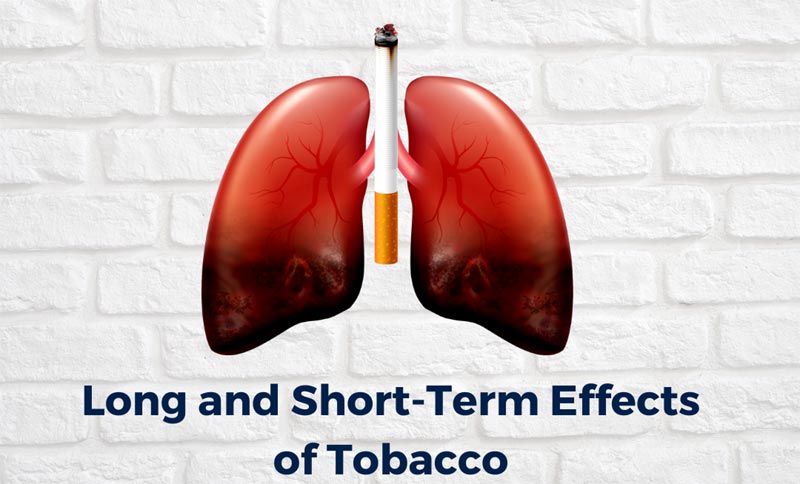
Most people smoke cigarettes, but some prefer pipes, cigars, hookah, or chewing tobacco. People of all ages smoke, and these days, teens and young adults are increasingly turning to e-cigarettes and vapes as well. Many cannot do without their daily cigarettes. Efforts have been made to encourage them to get rid of the habit, but it is a difficult task indeed.
Chemical Composition of Tobacco
| Chemical | Health Impact |
|---|---|
| Nicotine | Addiction, increased heart rate |
| Tar | Lung damage, cancer risk |
| Carbon Monoxide | Reduced oxygen transport in blood |
| Formaldehyde | Cancer risk |
| Ammonia | Respiratory issues |
Burning tobacco has serious ill effects on one’s health. What are these, you may ask? Lets us have a look.
Short term effects of tobacco
1. Increase in blood pressure
Tobacco use can also cause an increase in blood pressure, which can put additional strain on the heart and blood vessels.
2. Heart rate goes up
Tobacco use can cause an increase in heart rate, which can lead to an increased risk of heart attack and stroke.
3. Increased risk of respiratory infections
When tobacco is smoked, the smoke damages the lining of the respiratory system, including the bronchial tubes and the lungs. This damage can weaken the immune system, making it more difficult for the body to fight infections.
Smokers are more likely to develop respiratory infections such as bronchitis and pneumonia, which tend to be more severe in smokers than in non-smokers. Smokers are also at an increased risk of developing lung infections such as tuberculosis and are more likely to experience complications from these infections.
In addition to increasing the risk of respiratory infections, tobacco use can also worsen existing respiratory conditions such as asthma and chronic obstructive pulmonary disease (COPD). On the other hand, quitting tobacco starts reducing the risk of respiratory infections within weeks, and lung function continues to improve over the months and years that follow.
4. Decrease in the flow of blood from the heart
Tobacco’s chemicals can constrict blood vessels, reducing blood flow to various parts of the body. This can lead to wound healing problems and increase the risk of heart attack and stroke.
5. Arteries become narrow
The chemicals in tobacco can damage the inner lining of arteries, causing them to become inflamed and leading to a build-up of plaque. Plaque is a sticky substance made up of fat, cholesterol, and other substances in the blood. As the plaque builds up, it can narrow the arteries and reduce the amount of blood that can flow through them. This process, known as atherosclerosis, can increase the risk of heart attack and stroke. It can also lead to other problems, such as peripheral artery disease, a condition in which the arteries that carry blood to the legs and feet become narrow, reducing blood flow to these areas.
6. Carbon monoxide reduces the oxygen content in the flow of blood
The smoke contains some harmful chemicals, including carbon monoxide. Carbon monoxide is a colorless, odorless gas produced when tobacco is burned. When inhaled, carbon monoxide binds to the hemoglobin in red blood cells, reducing the amount of oxygen carried to the body’s tissues.
This can lead to a variety of health problems, including:
- Reduced oxygen delivery to the body’s tissues: Carbon monoxide reduces the ability of the blood to carry oxygen to the body’s tissues, which can lead to problems such as fatigue, shortness of breath, and an increased risk of heart attack and stroke.
- Increased workload on the heart: The reduced oxygen delivery to the body’s tissues can put additional strain on the heart, which has to work harder to pump oxygen-depleted blood throughout the body.
- Damage to the blood vessels: Carbon monoxide can damage the blood vessels, leading to an increased risk of heart attack and stroke.
Tobacco may be used for pleasure or relaxation, but it seriously affects one’s health. Excessive use of it can be harmful to health.
Long term effects of Tobacco
- Smoking can result in chronic lung disease, including emphysema and chronic obstructive pulmonary disease (COPD).
- Use of tobacco can cause coronary heart disease.
- One can suffer from a stroke.
- Tobacco use can cause cancer of the lung, esophagus, larynx, bladder, mouth, and oral cavity. Smoking is also linked to cancers of the pancreas, cervix, kidneys, liver, stomach, colon and rectum, and acute myeloid leukemia. The WHO and CDC link smoking to at least 16 different types of cancer.
- Pregnant women who smoke face a higher risk of miscarriage, preterm birth, low birth weight babies, birth defects like cleft lip and palate, and sudden infant death syndrome (SIDS).
- Smoking is now also recognized as a significant cause of type 2 diabetes, gum disease and tooth loss, age-related macular degeneration (a leading cause of vision loss), erectile dysfunction in men, and reduced fertility in both men and women.
- Passive smoking, or non-smokers being exposed to smoke from those around them, can cause serious illnesses such as lung cancer, heart disease, stroke, and worsened asthma. Children of smokers are more prone to ear infections, asthma attacks, and SIDS.
- One can get addicted to nicotine in tobacco, and this addiction is a major reason why people find it hard to quit, even when they know the harms.
Health Effects of Clove Cigarettes
Clove cigarettes, also known as kreteks, are considered more dangerous than regular cigarettes. The “United States Centers for Disease Control and Prevention” reports that clove cigarettes contain higher amounts of tar, carbon monoxide, and nicotine than regular American cigarettes.
Some dangerous effects of clove cigarettes are listed below:
- An active ingredient of cloves is eugenol, used as a topical anesthetic in dentistry. Smoking eugenol through clove cigarettes can numb the throat and reduce the gag reflex.
- The anesthetic effect can cause food or liquids to enter the wrong pipe (aspiration).
- Lung infections, since clove cigarettes are usually inhaled more deeply and held longer than regular cigarettes.
- Allergic reactions to eugenol or other clove compounds.
- Respiratory illnesses such as bronchitis and pneumonia.
Adverse Symptoms of Smoking Clove Cigarettes
Some dangerous symptoms of smoking clove cigarettes include the following:
- Nausea
- Vomiting
- Bronchitis
- Pneumonia
- Allergies
- Coughing up blood
Clove cigarettes are sometimes seen as an alternative to regular smoking. Other common forms of alternative smoking include bidi smoking, hookah/shisha, and herbal cigarettes. Studies show that clove cigarettes are more often consumed by people aged below 30, who often pick them up because they think they are cool, safe, or different from regular cigarettes.
Clove cigarettes, bidis, hookah, and herbal cigarettes are not safer than regular cigarettes. In most cases, they are worse. They produce tar, carbon monoxide, and a long list of carcinogens. The perception of being “natural” leads many users to smoke for longer or inhale the smoke more deeply, which causes more harm.
What About E-Cigarettes and Vaping?
Since around 2015, e-cigarettes and vapes have become hugely popular, especially among teens and young adults. They were originally marketed as a “safer” way to consume nicotine, but the picture is more complicated.
E-cigarettes deliver nicotine through heated liquid rather than burning tobacco. This means most users avoid the tar and many of the combustion-related carcinogens found in regular cigarettes. For an adult smoker looking to quit, regulated nicotine-replacement vaping under medical guidance can be one option. In several countries, including the UK, cessation programs are now included.
That said, vaping is not harmless. The aerosol contains ultrafine particles, flavoring chemicals like diacetyl that have been linked to “popcorn lung,” heavy metals from the heating coil, and high doses of nicotine. In 2019, the EVALI outbreak (e-cigarette or vaping product use-associated lung injury) in the US caused thousands of hospitalizations and dozens of deaths, mostly linked to illicit THC vape products containing vitamin E acetate. Studies are also showing that young people who vape are more likely to start smoking regular cigarettes later. The bottom line, vaping is not a safe habit and is never a good idea for people who have not used tobacco before.
Quitting Tobacco: What Works
The good news is that the body starts repairing itself surprisingly quickly after the last cigarette. Heart rate and blood pressure begin to drop within 20 minutes, carbon monoxide levels in the blood return to normal within 12 hours, and lung function improves over weeks to months. Quitting before age 40 cuts the risk of dying from smoking-related disease by about 90 percent.
Modern cessation support that has evidence behind it includes nicotine replacement therapy (gum, patches, lozenges, inhalers, nasal spray). Other things include prescription medications like varenicline and bupropion, behavioral counseling, and quit coaching. There are also digital tools, such as quit-smoking apps and text-message support programs. National quit lines (in India, the National Tobacco Quit Line at 1800-11-2356) and similar services in most countries offer free help. Combining medication with counseling roughly doubles the chances of quitting compared to going cold turkey alone.
Tobacco & Clove Cigarettes: Evidence-Based Health Impacts
| Category | Key Finding | Source / Study | Health Implication |
|---|---|---|---|
| Nicotine Addiction | Nicotine reaches the brain in 10 seconds, creating dependency |
NIH – Nicotine Addiction Pathophysiology |
Triggers cycle of addiction, withdrawal, and reinforcement |
| Cardiovascular Risk | Smoking increases risk of coronary heart disease and stroke by 2 to 4 times |
CDC – Health Effects of Smoking |
Major cause of preventable death globally |
| Carbon Monoxide Exposure | Reduces oxygen-carrying capacity of blood by binding to hemoglobin |
Toxicology Reports (2018) |
Results in fatigue, poor circulation, heart strain |
| Respiratory Infections | Smokers are 3x more likely to develop bronchitis and pneumonia |
Journal of Clinical Medicine (2022) |
Weakened lung defenses and impaired mucosal immunity |
| Clove Cigarettes | Contain ~2x more tar, nicotine, and CO than regular cigarettes |
CDC – Clove Cigarettes Overview |
Increased risks of respiratory suppression, lung damage |
| Eugenol Toxicity | Found in cloves, eugenol can paralyze throat sensation |
International Journal of Dentistry (2011) |
Raises aspiration risk, infection, and bleeding |
| Secondhand Smoke | Linked to over 41,000 adult and around 400 infant deaths yearly in the U.S. |
CDC – Secondhand Smoke Facts |
Triggers lung cancer, heart disease, asthma, SIDS in non-smokers |
| Youth Smoking Trends | Alternative cigarettes (e.g., cloves) are most popular among the under-30 age group |
JAMA Pediatrics (2014) |
Youths often believe alternatives are “safer” despite higher toxicity |
| Long-Term Disease Burden | Smoking causes 16+ types of cancer and about 30 percent of all cancer deaths |
National Cancer Institute (NCI) |
Comprehensive impact on nearly every organ system |
Note: Tobacco and clove cigarette consumption, regardless of form, are scientifically linked to cancer, cardiovascular disease, addiction, and early mortality. Alternatives like bidis, hookahs, “herbal” cigarettes, and e-cigarettes are not safe alternatives and are often less regulated. Public education, cessation programs, and easy access to quitting support remain critical.

9 Comments
I like cheese
you like cheese what the ok……
me too
i do too hows life been for the past 9 years
same here
wow…just what i needed!!!thanx …wishes and gud luck..
I smoke every day and probably gunna die in the near future beacuse if it and that’s the reason I love cigs!
same 🙁
Smoking can even hurt your cholesterol.