

Growing abundantly in various parts of Asia and the slopes of the Andes, the Custard Apple is a native of South America and the West Indies. Often known as Cherimoyas, these fruits are a powerhouse of Vitamin C. Round, lopsided, heart-shaped or irregular shaped; custard apples have a hard, rough and scaly exterior skin that’s green or brownish, with a whitish-yellow soft, creamy inside.
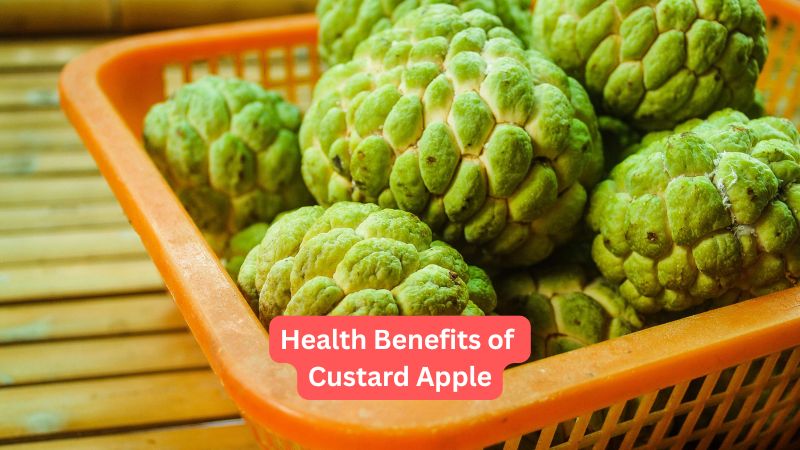
In India this fruit is better known as sitaphal, sharifa or sugar apple. Its botanical name is Annona squamosa. The season runs from the end of the monsoon into early winter, so you will find it most often between August and November. When ripe it turns soft and sweet, and you can eat it with a spoon.
Custard Apple Nutrition (per 100 g)
Most of the value in a custard apple comes from its vitamin C, fiber and minerals. Here is a rough breakdown for 100 grams of ripe pulp. The numbers shift a little with variety and ripeness.
| Nutrient | Amount per 100 g |
|---|---|
| Energy | 101 kcal |
| Carbohydrates | 25 g |
| Dietary fiber | 2.4 g |
| Protein | 1.7 g |
| Fat | 0.6 g |
| Vitamin C | 36 mg |
| Vitamin B6 | 0.2 mg |
| Potassium | 382 mg |
| Magnesium | 21 mg |
| Calcium | 24 mg |
| Iron | 0.6 mg |
Values are based on USDA data. Source.
A medium fruit weighs around 150 g. So one fruit gives you close to 150 calories and a big share of your daily vitamin C. Among all the fruits in the Annona family, the sugar apple carries the most vitamin C.
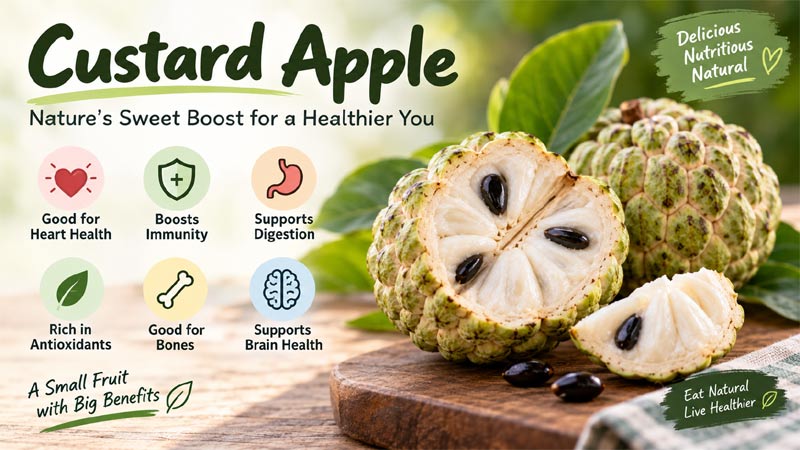
Benefits of Custard Apple as Antioxidants
The inside of the fruit is sweet to taste and creamy to touch. The fruit gathers its curious dessert-like name because of its sweet flesh that resembles custard and tastes like the sweet sugary dessert as well. But it isn’t just its taste that makes Custard apples such a popular fruit. These fruits are rich in Vitamin C, a powerful anti-oxidizing agent for the human body that helps to fight off free radicals. Custard apples also contain Vitamin A that is beneficial for good eyesight, healthy skin and hair. It also contains Niacin, Vitamin B6, Riboflavin and Thiamin, all cousins of the Vitamin family and helpful for the human body in various ways.
Health Benefits of Custard Apple
Below are some of the top Custard Apple Health Benefits –
- Custard apples are also rich in magnesium and potassium, both of which are beneficial for us. While potassium helps the body to fight against weakening muscles, magnesium helps to equalize the water balance in our body, thereby reducing acid levels from joints and reducing chances of arthritis and rheumatism. Magnesium also relaxes the heart muscles and protects the heart from various diseases. The fruit also contains dietary fibers that help in digestion and has a low fat content that helps to maintain optimum health. Unripe fruits can be dried ground into a powder and used to treat vomiting, dysentery and diarrhea and even treat lice problems. A pulp made from the skin of fruit will help you to treat most boils, ulcers, cuts and abscesses
- Custard apples work as great expectorants, stimulants, coolants and haematinic agents that are extremely useful for treating anemia.Being an expectorant means eating custard apple will clear your nasal tract and help to expel mucous and cough, which is really helpful for regular smokers. Because of its natural sugar content, custard apples are even eaten by people under a strict diet, often substituted for milk. The fruit pulp can also be blended with yoghurt and natural honey and drunk as a smoothie, especially if someone wants to gain weight. Not only that, even the bark of the custard apple tree is useful. Containing natural tannins and astringent, the bark is dried and ground used to make herbal medicines, which can cure tooth ailments, gum ache, etc. It is even said that the leaves of the Cherimoya plant can cure cancer
- Custard apples contain a good amount of copper. This helps the body to build more hemoglobin. This property is especially beneficial during pregnancy as pregnant woman need a minimum of 1000 mg copper in their daily diet. This prevents premature delivery of the baby and also prevents against risk of anemia during pregnancy. Not just that the seeds of the custard apple have great insecticide properties and can be dried, ground and used around the house to drive away various insects
Custard Apple Health Benefits Explained
Here is a closer look at what the fruit does, and what the research shows.
Supports immunity and skin
The vitamin C in custard apple helps your body fight infection and build collagen. Collagen keeps skin firm and helps wounds heal. Vitamin C also helps you absorb iron from plant foods, which is useful for anemia.
Helps digestion
The soft pulp has around 2.4 g of fiber per 100 g. Fiber adds bulk to stool and keeps things moving, which can ease constipation. Add it slowly if you are not used to high-fiber foods, since too much at once can cause gas.
Good for the heart
One fruit gives more potassium than a banana. Potassium helps control blood pressure by balancing out sodium. Magnesium supports a steady heartbeat. Both are good for the heart.
Steady energy without a sharp sugar spike
Custard apple is sweet, but its glycemic index sits in the low to moderate range, around 54. The fiber slows down how fast the sugar reaches your blood. Portion size still matters, because the fruit is high in natural sugar.
Brain and mood
It is a fair source of vitamin B6. B6 helps your body make the brain chemicals that steady mood and support sleep.
Useful in pregnancy, in normal amounts
The fruit brings vitamin C, fiber and potassium, which are all helpful in pregnancy. Keep it to about one fruit a day to watch the sugar, wash it well, and never eat the seeds. Check with your doctor first.
How to Choose, Ripen and Eat Custard Apple
- Pick fruit that is firm with a slight give. Avoid ones that are rock hard or already mushy.
- Let it ripen at room temperature for a few days. It is ready when it yields to a gentle press.
- Once ripe, keep it in the fridge and eat it within 2 to 3 days.
- Cut it open, scoop the white pulp with a spoon, and set aside the hard black seeds.
- Blend the pulp into milkshakes, smoothies, or kulfi. Remove every seed first.
Side Effects and Safety Notes
Custard apple is safe for most people when you eat the ripe pulp in normal amounts. A few points are worth knowing.
Never eat the seeds
The hard seeds are toxic. Do not chew or swallow them. In some parts of India the crushed seed powder is used to treat head lice. If this powder gets into the eyes, it can cause serious eye injury. Doctors have reported cases of toxic eye damage within hours of contact. Keep seeds and seed powder well away from the eyes, and out of reach of children. Source.
Go easy if you have diabetes
The fruit is high in natural sugar. Keep to a small portion and fit it into your meal plan. Speak to your doctor if you manage your blood sugar.
Do not overdo it, and skip leaf or seed brews
Fruits in the Annona family contain natural compounds called acetogenins, such as annonacin. In lab and animal studies these act as nerve toxins. Studies in the Caribbean linked very heavy, long-term intake of these fruits and homemade leaf brews to a rare movement disorder. The link is not proven for normal eating, and the risk was tied to large daily amounts over many years, mostly from soursop and from leaf preparations. So enjoy the ripe fruit in sensible amounts. Avoid home remedies made from the leaves, bark, or seeds. Source.
Custard Apple FAQs
Is custard apple good for health?
Yes. The ripe pulp is a good source of vitamin C, fiber, potassium, and vitamin B6. In normal amounts it supports immunity, digestion, and heart health.
Can diabetics eat custard apple?
In small portions, yes. The glycemic index is low to moderate, but the fruit is high in natural sugar. Keep the portion small and check with your doctor.
Can I eat custard apple during pregnancy?
Yes, in moderation. It gives vitamin C, fiber, and potassium. Limit it to about one fruit a day, wash it well, remove all seeds, and ask your doctor if you are unsure.
Are custard apple seeds poisonous?
Yes. Do not chew or swallow the seeds. Keep crushed seeds and seed powder away from the eyes, as they can cause serious eye injury.
How many custard apples can I eat in a day?
One medium fruit a day suits most people. It is sweet and calorie dense, so more than that adds up quickly.
When is custard apple in season in India?
Mostly from August to November, from the end of the monsoon into early winter.
References
- Custard apple nutrition facts, USDA based. nutrition-and-you.com
- Champy P, et al. Quantification of acetogenins in Annona linked to atypical Parkinsonism. Movement Disorders, 2005. Wiley Online Library
- Nagaraja H, et al. Ocular toxicity by seeds of Annona squamosa. Indian Journal of Ophthalmology, 2016. NCBI
This article is for general information only and is not medical advice. Please talk to a doctor for guidance on your own health.
