

What is camphor? It is a white, waxy substance with a strong, cooling smell. It comes from the camphor tree, and it is also made in factories. People use it for pooja, pain balms, colds, and to keep insects away. One key point up front. Regular camphor is toxic if swallowed. So never eat it or drink camphor water. Only special food-grade camphor is safe to eat, and only in tiny amounts.
Camphor has a fresh and refreshing fragrance similar to menthol. It is widely used in Hindu ceremonies and rituals. However, people have been using it for ages as a home remedy ble in religious practices for its natural therapeutic properties.
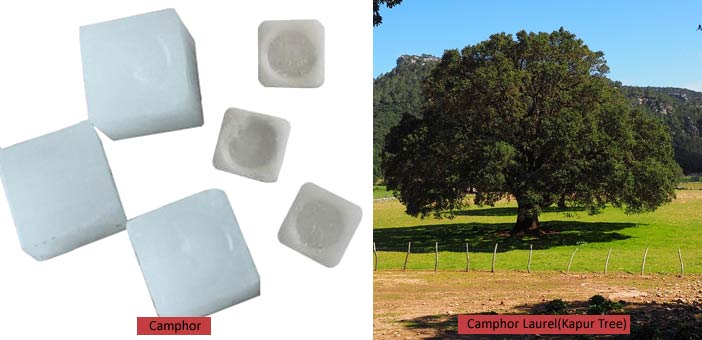
Camphor plays a vital role in every Indian household, as it is an excellent home remedy for several ailments, ranging from cough and insect bites to cardiac issues. This white-cubed wonder never fails when you need a magic healer to get better relief from several topics.
Camphor at a Glance
| Detail | Description |
|---|---|
| What it is | A white, waxy, strong-smelling substance |
| Source | The camphor tree (Cinnamomum camphora), also made synthetically |
| Common forms | Tablets, blocks, balls, crystals, cubes, powder, oil |
| Main home uses | Pooja, pain balms, cold relief, insect repelling, air freshening |
| Edible type | Only food grade Bhimseni kapoor, used in tiny amounts |
| For skin | Always mix with a carrier oil. Never apply it on broken skin. |
| Big safety point | It is toxic when swallowed. Keep away from children and pets. |
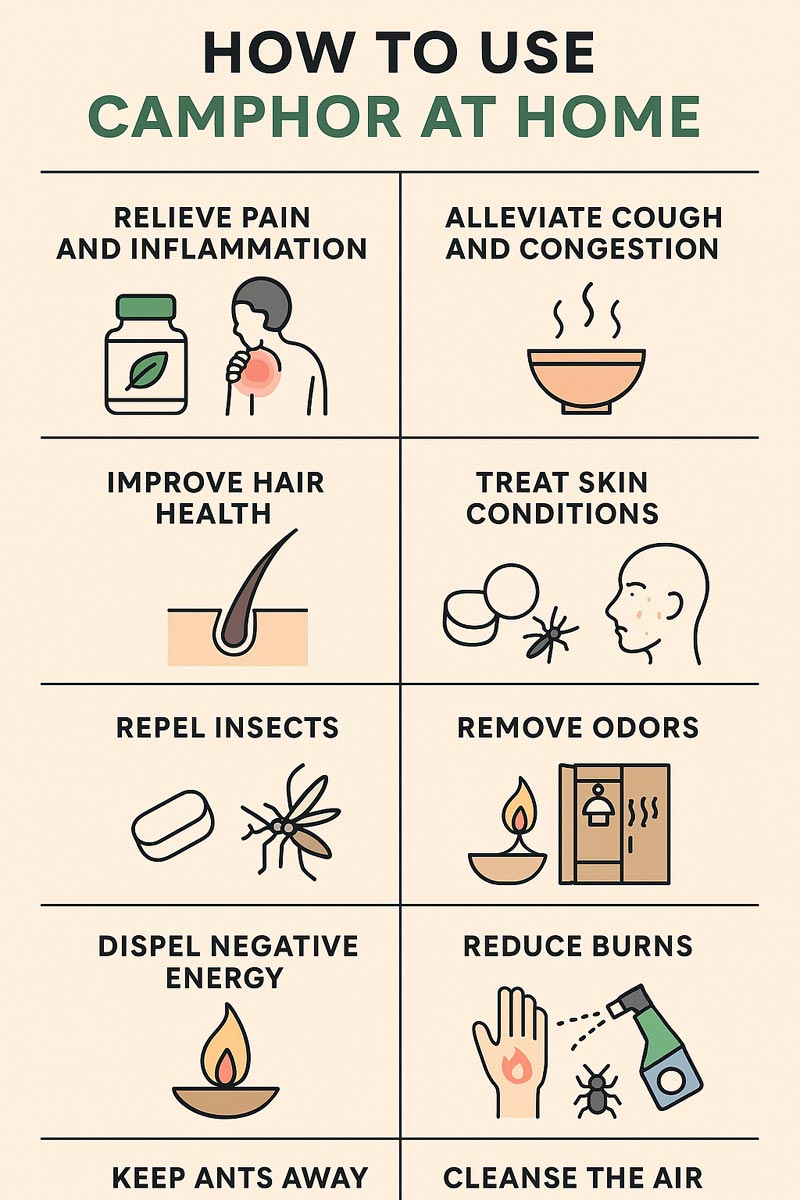
How to Use Camphor at Home
You can use camphor at home in the following ways to help prevent pain, infection, colds, and insect bites.
1. For Curing Breathing Problems
Camphor can eliminate congestion in the lungs, bronchial tracts, and nasal region to promote normal breathing. To clear the mucus, add a teaspoon to boiling water and steam for 10 minutes.
When you inhale this steam mixture, it helps protect the lining of your respiratory organs against cold and flu. This steam can also help relieve bronchitis and reduce throat irritation.
2. Relieve Acute Pain and Inflammation
Because camphor has sedative properties, it is mixed with hot sesame or coconut oil and massaged into the body to relieve pain, aches, and swelling associated with arthritis, rheumatism, gout, and osteoarthritis.
Regularly applying a mixture of hot olive oil and camphor can relieves neuralgia. This painful condition occurs when the cranial nerve becomes inflamed. Camphor’s icy, cooling sensation numbs the area and reduces pain.
It is used to treat muscle cramps and joint pain. Let us have a look at the recipe for the same –
- Joint Pain: Drop 2-3 pieces of camphor in heated sesame oil. Mix it well. Now apply it to the painful joints. In winter or cold places, mustard oil could be used in place of sesame oil.
- Muscle Cramp: The above recipe is primarily used for muscle cramps as an ointment.
3. To Treat Cold
A home remedy prepared with camphor and coconut oil is an excellent choice for treating colds and coughs in infants. Heat 1 tablespoon of coconut oil and remove it from the fire. Now add a small piece of camphor and wait until it melts completely.
Apply this warm oil to the infant’s neck, spine, and chest to help them breathe freely and sleep well.
You can also use it to help with a stuffy nose. Put a few drops on a handkerchief and inhale. It will clear the stuffy nose.
4. To Get Relief From Itchy And Irritating Skin
The refreshingly cool camphor is a great choice for relieving skin irritation and itching. When you develop skin irritation or itchiness, apply a paste made with camphor and a little water for instant relief.
Camphor acts on the affected skin immediately. Its compounds soothe nerve endings to alleviate the itchiness. It also helps reduce the reddish color on the skin’s surface.
Camphor is a natural compound that has strong antiseptic and antimicrobial properties. It is useful in preventing and treating skin infections, as per the research done by Wroclaw Medical University. It shows great potential when combined with medical devices or cosmetics. However, the researchers have cautioned about its toxicity, which needs to be addressed. They also inferred that its role in wound healing and fighting drug-resistant microbes requires further study and deeper investigation.
5. For Fighting Fungal Infections
Camphor helps fight toenail fungal infections because it has antiseptic and antifungal properties and can help prevent recurrence. Dissolve a teaspoon of camphor in 1/2 a cup of water and apply it to the infected area. Its anti-inflammatory properties help lower the pain of gum infections.
6. To Rectify Cracked Heels
You no longer need to feel bad about cracked heels, as camphor can gently treat them. Its rich cleansing properties soothe coarse and rough heels by relieving and toning the skin. Make a solution with water and camphor, then soak your feet in the solution for 7 minutes.
Also, use a foot scrub to exfoliate dead skin, then pat dry with a soft towel. Follow with a moisturizing cream. Repeat weekly for smooth, toned heels.
7. Treating Burns
Camphor can treat minor burns and help reduce burn scars. Mix a small piece of camphor with water and apply it to the affected area. Repeat every day until the burn scars disappear. Camphor’s cooling, calming effects soothe the nerves and skin, reducing burn pain.
Its powder mixed with oil also helps heal burns. However, do not apply camphor oil to heavily burned skin or when the skin is open, injured, or broken. University of Texas at EL PASO
8. To Improve Hair Health
Massaging your scalp with a mixture of coconut oil and camphor can strengthen hair roots. It contains active ingredients that boost blood circulation in the scalp and keep follicles well nourished to promote hair growth.
This hair mixture also helps prevent hair thinning and restores the sheen and gloss of hair strands. Mix camphor with yogurt, essential oils, or eggs to have dandruff-free hair.
9. To Lower Pimples, Eczema And Acne
This miraculous white substance from the camphor tree contains beneficial compounds that help cure acne by lessening irritation and redness. Regular use of camphor can help you achieve flawless, blemish-free skin. It is an excellent choice to reduce the swelling and pain associated with pimples.
Camphor’s anti-inflammatory properties help reduce pimple and acne recurrence. It also helps treat eczema by controlling itching and preventing flare-ups.
10. Repel Moth and Insects
Camphor can repel moths and other insects. Soak a small piece of cloth in camphor oil and leave it in an open place in your room to drive away insects like flies and fleas. This oil also helps with head lice and can repel germs at home.
Placing some pieces of camphor in your wardrobes and cupboards will keep them free from moths. You can also use it to repel mosquitoes by holding a small cup of boiling water with a few camphor pieces in the room.
Types and Forms of Camphor
Camphor comes in many forms. Each one suits a different job. Here is a quick guide.
| Form | What it looks like | Best used for |
|---|---|---|
| Camphor blocks (slabs) | Solid white bars | Pooja and aarti, room freshening, moth repelling |
| Camphor tablets | Small round or square pieces | Burning for pooja, quick air freshening |
| Camphor balls | Small white balls | Keeping moths and insects out of cupboards |
| Camphor crystals or cubes | Loose crystals or small cubes | Mixing into oils and home solutions |
| Camphor powder | Fine white powder | Balms, pastes, and easy mixing |
| Camphor oil | Camphor mixed in a carrier oil | Massage for sore muscles and joints, skin relief |
| Edible camphor (Bhimseni kapoor) | Natural food grade flakes | A tiny pinch in sweets and prasadam only |
| Camphor gum or spirit | Gum blocks or camphor in spirit | Older balms and rubs, external use |
Camphor Water: Uses and a Safety Note
Many people ask about camphor water. It is simply camphor mixed or dissolved in water. In Indian homes it is popular for good reasons.
- Add a few pieces to your mop water to clean floors and leave a fresh scent.
- Keep a small open bowl of camphor water in a room to freshen the air.
- Use it as a simple spray to keep mosquitoes and insects away.
- Add it to bath water for a cooling feel on the skin.
Now the important part. Do not drink camphor water. Regular camphor, the kind used for pooja and moth balls, is toxic if swallowed (NCBI). Even a small amount can be dangerous, and it is very risky for children. So keep camphor and camphor water for cleaning and external use only. Store it high up, away from kids and pets.
Edible Camphor vs Regular Camphor
This is a point people often get wrong, so it matters.
- Regular camphor: The white tablets, blocks, and balls sold for pooja, burning, and moth repelling. This kind is usually synthetic. It is made for burning and household use. It is not food. Swallowing it is toxic.
- Edible camphor: A natural, food grade type. In India it is called Bhimseni kapoor or pachai karpooram. It is used in very small pinches in sweets, paan, and prasadam. Even then, use only a tiny amount.
Never swap one for the other. If a recipe asks for edible camphor, buy only the food grade kind and use very little. If you are unsure which one you have, do not eat it.
Camphor Dosage and Safety
| Application | Recommended Dosage | Safety Precautions |
|---|---|---|
| Inhalation | A few drops in hot water | Avoid direct inhalation of camphor vapors |
| Topical Application | Mix with carrier oil | Do not apply to broken skin |
| Burning | One camphor tablet | Maintain adequate ventilation |
| Direct Application | Small amount on forehead | Avoid contact with eyes |
Safety Precautions and Side Effects of Camphor
Safety Precautions with Camphor
- Do Not Ingest: Camphor is toxic if swallowed, even in small doses. – Source
- Avoid Use on Broken Skin: Applying camphor on broken or damaged skin causes rapid absorption and toxicity. – Source
- Keep Away from Children: Even small amounts can be fatal if accidentally ingested by children. – Source
- Use in Moderation: Excessive topical use or inhalation from vaporizers causes side effects.
- Avoid During Pregnancy: Camphor pose dangers during pregnancy and should be avoided unless prescribed. – Source
Side Effects of Camphor
- Skin Irritation or Rash: Topical camphor causes redness, itching, or rash in sensitive individuals. – Source
- Allergic Reactions: Some people experience swelling, redness, or itching after applying camphor. – Source
- Seizures (in severe cases): Ingesting camphor or using too much leads to serious neurological effects. – Source
- Dizziness or Nausea: Prolonged exposure to camphor vapors may lead to mild systemic effects.
About Camphor
How to make Camphor essential oil at home?
Take pieces or blocks and grind them into a powder. Pour 2 cups of coconut oil into a pan and heat it on medium flame. Stir occasionally so it doesn’t burn. Add 2 tablespoons of powdered camphor and mix it into the oil while it’s still heating. Mix well until the powder dissolves completely. Once the powder is fully dissolved, remove the pan from the stove and let it cool. While the solution cools, mix in 2 tbsp lemon juice. Store the oil in an airtight container.
History of Camphor
Camphor is an aromatic substance naturally sourced from the camphor tree, which is native to Eastern Asia. This evergreen tree grows in cold climates and can reach over 100 feet tall. The botanical term for the camphor tree is Cinnamomum camphora, where “Kinnamomon” means spice in Greek.
This tree has pointed green leaves, yellowish-white flower clusters, and oval-shaped red berries. It is a natural, pleasant-smelling substance and part of the terpenoid family, which includes perfumed plant substances like menthol and citral. In the 1920s, camphor was produced from camphor laurel.
Later, it was synthesized by distilling the camphor tree’s wood, leaves, and bark with turpentine oil. It produces white, waxy camphor crystals (C10H160). It is widely used to prepare Ayurvedic medicines, pain sprays, balms, tinctures, ointments, and emulsions.
Now that you have learned how to use camphor at home, start using this pure, white, waxy substance as an effective home remedy.
Camphor Product Types
| Product Type | Description | Common Uses |
|---|---|---|
| Camphor Tablets | Solid tablets of camphor | Burning, air freshening |
| Camphor Oil | Camphor dissolved in oil | Topical application, pain relief |
| Camphor Balm | Camphor-based ointment | Headache relief, muscle pain |
| Camphor Balls | Small balls of camphor | Moth repellent, insect repellent |
Ways You Can Use Camphor At Home FAQ
What is an important commercial use for camphor?
Camphor is a natural analgesic and anti-inflammatory. It is often used in herbal medicine to treat various medical conditions, including pain relief, fever reduction, headaches, toothache, menstrual cramps, Crohn’s disease, arthritis, etc. In addition, camphor can help reduce pain and inflammation from other medical conditions such as burns, cuts, and fractures. Camphor is also used as a fragrance and flavor agent in foods and beverages. It has a pleasant odor and is often used in sweets, savory dishes, and sometimes even alcoholic drinks.
Can we keep camphor in the bathroom?
Yes, you can keep camphor in the bathroom. Camphor is a natural oil used to treat wounds and aches. You can also use it as a deodorant to freshen the room.
Is camphor safe to use on the skin?
Camphor is safe for skin use if diluted with a carrier oil like coconut oil. Avoid applying it directly to broken skin. It may irritate. Always perform a patch test before use. Overuse leads to redness or allergic reactions. For best results, consult a dermatologist if you have sensitive skin.
Can burning camphor purify indoor air?
Burning camphor helps purify indoor air by removing bacteria, viruses, and foul smells. Its fragrance creates a calming effect. It also helps in repelling mosquitoes and insects. Use it in a ventilated space to avoid smoke buildup. Camphor is popular in homes for religious and wellness purposes.
How can camphor repel mosquitoes and insects?
Camphor repels mosquitoes and insects with its strong scent. Burn camphor or dissolve it in water to spray around the home. It’s a natural alternative to chemical repellents. Place camphor tablets in cabinets or near windows to keep pests away effectively. This simple method is eco-friendly and safe.
Can camphor help with hair growth?
Camphor promotes hair growth by improving scalp circulation. It also helps in reducing dandruff. To apply it, mix camphor with oils like coconut or castor oil. Massage the mixture into your scalp. Leave it for 20 minutes, and then wash thoroughly. Regular use strengthens hair roots and increases overall scalp wellness.
What precautions should I take when using camphor at home?
Use camphor in well-ventilated spaces to avoid inhaling excess fumes. Keep it out of reach of children and pets, as ingestion might be toxic for them. Always dilute camphor for skin applications. Avoid using it directly on sensitive or broken skin. Do not consume camphor unless prescribed in minimal amounts by a doctor.
What is camphor, and what is it used for?
Camphor is a white, waxy substance with a strong, cool smell. It comes from the camphor tree, and it is also made in factories. At home people use it for pooja, for pain balms, for cold and cough relief, and to keep moths and mosquitoes away. It is for burning and external use. It is not meant to be eaten.
Can you drink camphor water?
No. Please do not drink camphor water made from normal pooja or moth camphor. That camphor is toxic if swallowed and is risky for children. Camphor water is meant for mopping floors, freshening rooms, and keeping insects away. Keep it for cleaning and external use only.
What is edible camphor or Bhimseni kapoor?
Edible camphor is a natural, food grade type of camphor. In India it is known as Bhimseni kapoor or pachai karpooram. It is used in very small pinches in sweets, paan, and prasadam. It is not the same as the white tablets used for pooja or moth balls. Use only the food grade kind for eating, and only a tiny amount.
What are camphor blocks used for?
Camphor blocks are mainly burned during pooja and aarti. People also use them to freshen a room and to keep moths and insects away in cupboards and drawers. Keep the blocks in a safe spot, away from children and pets.
Can I put camphor in my shoes, wardrobe, or dustbin?
Yes. A small piece of camphor helps cut bad odor and keeps insects away. Put it in shoes to fight smell, in the wardrobe to protect clothes from moths, and near the dustbin to reduce odor and flies. Keep it in a small pouch and out of reach of kids and pets.
What are the benefits of camphor oil?
Camphor oil is mainly for the skin and muscles. Massaged in, it can ease sore muscles, stiff joints, itching, and chest congestion. Always use it mixed with a carrier oil, never neat. Do not use it on broken skin, and never swallow it.

7 Comments
I liked all the uses of camphor mentioned by you.
Few minutes back, I was suffering from severe cold, cough and headache. I read ur article, stopped in midst, prepared coconut oil n camphor mixture n applied immediately on chest, neck, head and the areas which were aching.
To my surprise within few minutes, I started feeling well n good. I hope by morning, I will be fine. After that, I proceeded n read ur full article just now n felt very nice to know all the natural remedies from camphor. Thank you so much.
Dr. C. Sony from Nagpur, Maharastra, India.
What a miracle camphor is! I heated 2 packets of pure coconut oil, mixed it with a 1/2 block of refined camphor until fully dissolved, then let it cool. I use it topically for my pain caused by my ankylosing spondylitis. Nearly immediately takes the pain away!
need camphor block or camphor oil for usages in the home
this product is good for usages in the hom. please help me to get it.
Can it be consumed
I’m very interested in learning more about camphor.
Your article is well written. Where can I go to learn more?
How much or how many pellets would you use for a bath? Thx