

Though rare, a mushroom allergy is estimated to affect a small fraction of people with food allergies, confirmed prevalence isn’t well established, but most reports put it at under 1 percent of the general population. Mushrooms, a type of fungus, are usually enjoyed by those who eat them. However, people who suffer from mushroom allergy may experience symptoms even from being near the fungi. Like most food allergies, mushroom allergy is caused by a specific protein (and in some cases other compounds like mannitol) found in mushrooms. Childhood allergy to this food can fade as children grow, but adult-onset allergy tends to persist.
What is it in mushrooms that causes an allergy?
People can develop allergies from the mushroom’s flesh and, at times, from its spores. This primarily happens in people who are sensitive to mold. Mushrooms are fungi, and their spores can trigger reactions much like mold spores do. Once airborne spores are inhaled, usually in places where mushrooms are grown, stored, or processed, allergic reactions can occur in sensitive individuals.
Because mushrooms are fungi, cross-reactivity with molds is common. If someone is already allergic to molds, they may also show allergic symptoms when exposed to mushrooms. A few people might also react to mushroom proteins, such as manganese-dependent superoxide dismutase (MnSOD) and trehalose phosphorylase, or to mannitol, a sugar alcohol naturally present in mushrooms that has been identified as the trigger in some anaphylactic cases.
People who work in the food industry, especially in mushroom cultivation, harvesting, and packaging, are at higher risk. Allergy doesn’t always start in childhood, adults who have eaten mushrooms regularly for years can suddenly develop a sensitivity later in life.
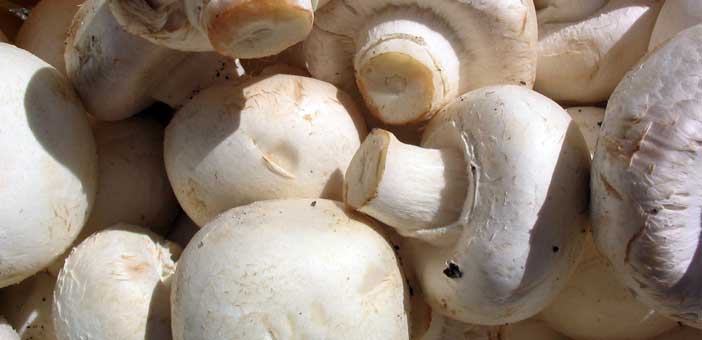
Allergic reactions to mushrooms usually occur from eating, handling, or inhaling airborne spores. Cooking can reduce reactivity in some cases, heat does break down certain mushroom proteins, but several mushroom allergens are heat-stable, so cooking doesn’t reliably eliminate the risk. Some people tolerate canned or well-cooked mushrooms but react to raw or lightly cooked ones, while others react regardless of how the mushrooms are prepared. If you’ve had a reaction, the safest approach is to avoid mushrooms in all forms until a doctor confirms what is safe for you.
Facts about Mushroom Allergy
- As per older surveys for mushroom allergy, the sensitization rates were between 1% to 30% in selected populations. As per modern estimates, confirmed allergies are well below 1%.
- Mushroom-related aeroallergens generally peak from June to November. The highest counts are in August and September.
- Some mushroom species contain multiple allergens, including both heat-stable and heat-labile proteins.
- Allergen research is hampered by the difficulty of species identification and the wide variety of edible and wild mushrooms.
Source: https://pubmed.ncbi.nlm.nih.gov/3278649/
Mushroom Allergy Symptoms
Since mushroom allergies can be triggered by air, contact, or ingestion, symptoms range from airborne allergy to contact dermatitis to classic food allergy. Here are some of the common signs:
- Itching, burning, or tingling in the mouth after eating a mushroom (often called oral allergy syndrome)
- Swelling of the tongue, lips, or mouth
- Itching on the body, especially in areas that came into direct contact with mushrooms
- Nausea, vomiting, or abdominal cramps
- Tightness in the chest, wheezing, or shortness of breath
- Swelling of the throat
- Sneezing, runny nose, or itchy eyes if reacting to spores
- Faster heartbeat or palpitations
A person may also experience dizziness, loss of consciousness, a sudden fall in blood pressure, or full-blown anaphylaxis. Though this is rare, anyone diagnosed with a serious mushroom allergy should carry an epinephrine auto-injector (EpiPen, Auvi-Q, or similar). A needle-free nasal spray version of epinephrine called neffy was approved by the FDA in 2024 as an alternative for adults and older children who can’t or won’t use an injector. Even after using epinephrine, call emergency services right away, reactions can return after the medication wears off.
In addition to a mushroom allergy, some people also react to other fungi, such as molds and yeast. Cheese, wine, and grapes can carry these. In seasons when mold counts are high, people sensitive to fungi can also develop allergic rhinitis.
Exposure Routes & Symptom Onset
| Exposure Route | Typical Symptoms | Onset Time | Notes |
|---|---|---|---|
| Ingestion | Oral itching, swelling of lips/tongue, hives, nausea, vomiting, abdominal cramps | Minutes to 2 hours | Common in IgE-mediated food allergies. Study |
| Inhalation (spores) | Sneezing, runny nose, itchy eyes, wheezing, asthma-like symptoms | Minutes to hours | Seen in mushroom workers or during harvest. Mushroom grower allergy report |
| Skin Contact | Rash, redness, itching, contact dermatitis | Hours to days | Rare; use of gloves is recommended. Contact dermatitis from fungi |
Mushroom Allergy Treatment
Mushroom allergy is often confused with mushroom intolerance. If you experience abdominal cramps and indigestion after eating mushrooms but no skin, breathing, or systemic symptoms, this is more likely an intolerance, not a true allergy. Either way, avoiding mushrooms is the simplest solution.
Antihistamines (cetirizine, loratadine, fexofenadine, and others) are the first line of treatment for mild to moderate symptoms. Topical steroids can be used for skin rashes, hives, and contact dermatitis. For nasal symptoms from spore exposure, an over-the-counter nasal steroid spray (such as fluticasone or mometasone) often helps. People with a confirmed severe allergy should work with an allergist to develop a written emergency action plan and carry epinephrine. Allergen avoidance also means reading labels carefully, since mushroom extract, mycelium, and yeast extract turn up in soups, sauces, plant-based meat substitutes, and seasoning blends.
Symptom Severity & Recommended Actions
| Symptom Severity | Examples | Immediate Action | Medical Advice |
|---|---|---|---|
| Mild | Oral itching, mild rash | Rinse mouth or skin, take an antihistamine | Monitor symptoms; usually resolve without escalation |
| Moderate | Hives, stomach pain, mild wheezing | Antihistamine and inhaler if asthmatic | Call doctor if symptoms persist or worsen |
| Severe | Throat tightness, breathing difficulty, dizziness | Use epinephrine auto-injector immediately | Call emergency services or visit the ER AAAAI: Anaphylaxis Guide |
Mushroom Allergy FAQs
Is mushroom high in histamine?
Mushrooms are not particularly high in histamine. Histamine is one type of biogenic amine, and while mushrooms are usually low in histamine, they do contain other biogenic amines and compounds (such as mannitol and certain proteins) that can cause issues for people with histamine intolerance or sensitivity. If you suspect histamine intolerance, keep a simple food-and-symptom log for a couple of weeks and discuss it with your doctor. It’ll be more useful than guesswork.
How long does a mushroom allergy last?
Skin reactions from contact with mushrooms might start 1 to 2 days after exposure and can last about a week. Severe or potentially life-threatening allergic reactions usually appear immediately or within minutes to a couple of hours and may need hospital care. Other skin-related or mild symptoms tend to appear within a day. Once you’ve identified mushrooms as a trigger, the only reliable way to prevent recurrences is to avoid it long-term, the allergy itself doesn’t usually go away in adults.
How common is mushroom allergy?
Mushroom allergy is uncommon. Confirmed allergy affects fewer than 1% of the general population. Sensitization (a positive blood or skin test without obvious symptoms) is more common, especially among people who already have a mold allergy or work around mushrooms. Children may outgrow it, but adult-onset mushroom allergy usually persists. If you suspect one, see an allergist for skin prick testing or specific IgE blood testing before deciding to cut out a major food group.

26 Comments
My young man seems to be fine with normal button/chestnut mushrooms, but has an allergic reaction to porcini mushrooms. He starts having asthma-like wheezing and eventually gets hives. Be interesting to know what mushrooms or other molds/fungi might have a similar reaction so he can avoid them!!!
my allergy is all mold and fungus blue cheese and black mold from water damage
even “toadstools” will set off a reaction
i carry epi and benadryl
I have the same problem. I have no allergic reaction to champinion mushrooms but I have very severe nausea and vomiting reactions to porcini mushrooms. We thought it was food poisoning. Try to avoid all mushrooms……
my mushroom allergy only got worse and
allergist has said AVOID
i too thought it was food poisoning for the longest time
I think I am allergic to mushrooms, I mean I was fine up until I ate a mushroom swiss angus snack wrap yesterday. Now I can’t talk or swallow…I am really worried but can’t afford to go to the doctor…what should I do?
Assuming you aren’t dead Shirley I hope you at least tried to take a benadryl or zertec antihistamine or use an epi-pen. Your throat can close up to the point you can’t breathe so I wouldn’t take that chance in the future. Carry an epi-pen at all times in case this happens again and use it immediately. It’s an injection you give yourself for situations like this.
Different foods and species of foods may contain differences in their protein strands, as well as differences in their over all chemical make up, so having differences in reactivity is not as foreign an idea as it seems. My boyfriend has an issue with cooked mushrooms and MSG. While it may prove harmless in your son’s case, I think it may behoove you to look into having your son tested for a reaction to MSG, as it is a natural derivative of many types of mushrooms, porcini having been found to be the type containing the highest concentration of it. I hope this is of use to you, and please, continue to share your findings so we may all continue learning from each other. 🙂
oh my this link to msg did not even dawn on me
may be why some of my favorite take out stirfrys cause reaction
be sides not to mention they cook mushrooms at most restaurants that serve stir fry
random information for you.. there are now fruit smoothies with mushrooms in them, so be VERY careful about what you pick up! I found that out the hard way!
I am allergic to all kinds of mushrooms, even during and after cooking. I can get burning in the mouth, severe nausua or vomiting, itching and palatations. I can even begin to feel itchy and nauseous if people around me eat mushrooms.
For this reason i always carry two epi-pens and antihistamines. I was only brave enough to try 4 kinds but i thought it best to just avoid all like the plague from now on!
my mushroom allergy only got worse and
allergist has said AVOID
the mushroom allergy can cause swelling of intestines and can drop blood pressure
I recently had an allergic reaction to mushrooms. My husband brought home a giant puffball and we peeled the outside cut it into slices sauté in butter garlic salt and rosemary. I took 2 very small bites my tongue started burning so I stopped eating them. (I have eaten mushrooms my whole life with out a proble
) about an hour later I started to itch and get hives all over my body from my head to my feet. I got scared and we won’t to the er. They gave me an epi shot, benedryl and steroids. It helped but that was the most intense feeling and I don’t want it to happen again. I am scared to try to eat ANY mushrooms now and I find that there are mushrooms in sooo many things. Has anyone else had this experience or similar? If so can you eat any mushrooms or are you allergic to them all now? And am I able to get an epi pen from my doctor or does this have to happen more than once to get them? Thank you for your reply
i had this exact same thing happen to me
and no i cannot eat or be around any kind of mushrooms at all any more
also non edible fungus outside (toadstools)
set off the allergy
black mold
and blue cheese sets off the allergic reaction as well
my dr. gave me epi immediately
I had never had any issues with eating mushrooms until in my early 30s. They weren’t a favorite of mine but if they were in a dish I ate them. Then I had an incident after eating chicken marsala with mushrooms. I got violently ill to the point of projectile vomiting. I initially thought I had just eaten something bad. Then a few months later I had another dish with mushrooms and got sick. Unfortunately I still didn’t make the connection. It took the third time of severe illness for me to make the connection that mushrooms were in each dish. I’ve never formally been diagnosed by an allergist but just avoid them because it’s not worth the risk.
I have found that even packet mixes with mushrooms in have the same effect
cream of mushroom soup sets my allergy off as well
and teryaki sauces can also contain mushroom
I am allergic to Pencillin I went out for a meal Thursday night to Prezzo for a meal had a Polla Charcoal salad I had field mushrooms in it I have not been well since my right side of my face is swollen and and painful I saw pharmacist said to take allergy relief 10 mgs for a couple of days but the swelling is worse do you think i need antibiotics know ? thanks
my allergist has said no penicillin for me
I Hate mushrooms so I just tell people I have an allergy.
I wish it were that simple. People handle mushrooms for others, cook steaks on the same grill, even suggest I just remove them from a cooked chilli etc. I have found people really do not take my situation seriously enough
exactly my own in laws ignore or forget the allergy all the time
makes me so angry
i now pick and choose what fsmily functions i attend due to my allergy
I work in a manufacturing company where we have used Porcini Powder for two years and all of a sudden I started wheezing badly and my chest and throat got really itchy. After a few weeks of not knowing the root cause I realised it was when I was in the area of the powder. I still eat mushrooms but now that I keep clear of the Porcini Powder I no longer feel I am breathing through a straw.
The itchiness would last for a few hours but the wheezing would last for days if not weeks so best for me to keep clear. If I do feel the symptoms I take an antihistamine and it helps a bit.
All mushrooms make me feel sick. If i’m lucky i’ll start vomiting right after eating them. If i’m unlucky i’ll be sick for 12-18 hours after. It’s sad that many people do not take this allergy seriously. At one point my mother would blend them and hide them in a dish. After i vomited a few times after eating such dish she realized i was not joking.
Happy to find this website. I am African American, age 65, and have been allergic to mushrooms since childhood, although my family thought I “just didn’t like them”, even though after eating them I became violently ill. To this day, I am afraid to eat some dishes family members prepare, because like another poster stated (Dorothy), they have been ground up and hidden in dishes, so people could see my reaction. People do not take this allergy seriously. I have had EPI pens for years. Everyone with a mushroom allergy should carry an EPI pen.
This is AWFUL. I was allergic to mushrooms as a child but seemed to outgrow the allergy in early adulthood, but now it’s back and worse than ever. It’s amazing how so many people do not take food allergies seriously. Even worse, some people try to “test” your allergies and this has happened to me, too.
On a related note to severe food allergies, I have a former coworker whose son went to a sleepover and never came home because they fed him food to which he was allergic and he passed away. This incident made me even more aware of my own allergies and to remain alert in all situations.
If you have a mushroom allergy make sure you don’t eat anything containing TRUFFLE OIL. I’m OK with the normal white supermarket mushrooms, but very ill with all others. Look out for things like porcini powder in stock cubes.